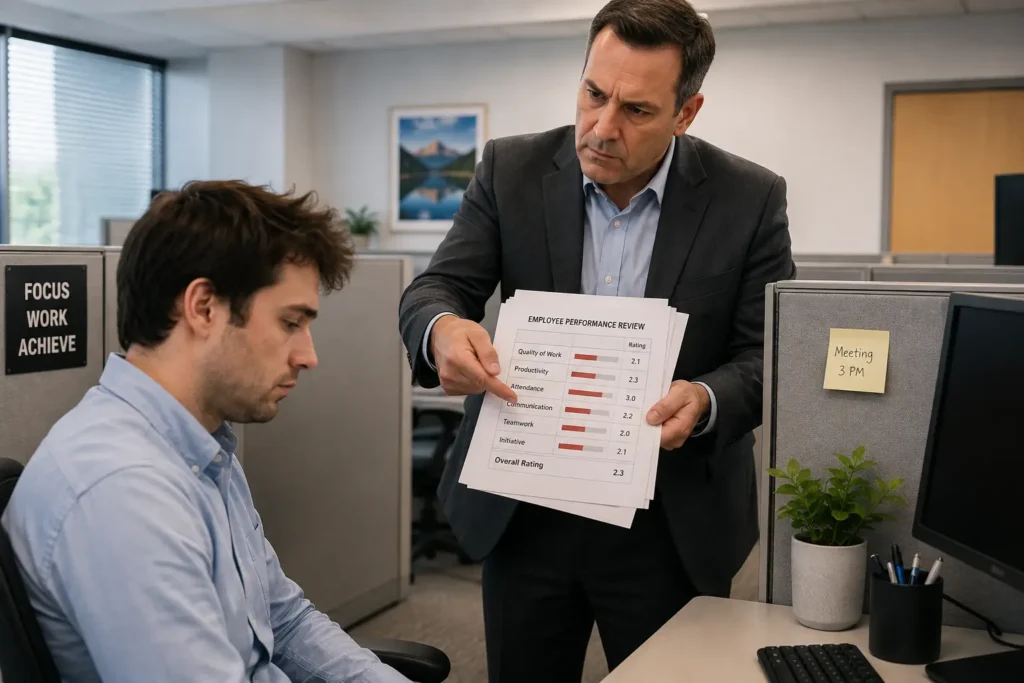
If you just lost your job and are asking yourself, “Can I get unemployment if I was fired for performance?” you are likely sitting at home feeling panicked, stressed, and uncertain about your next rent payment. Employers often make departing workers believe that being let down for poor performance strips away all financial assistance.
That is completely false. State unemployment systems were designed precisely to protect workers who lose their jobs through no direct fault of their own. Understanding how state workforce agencies evaluate job performance versus intentional misconduct is your key to securing the financial lifeline you deserve.
Are you actually eligible for unemployment benefits if you were fired for poor performance?
Yes, you can generally get Unemployment Insurance (UI) if you were fired for poor performance. State workforce agencies distinguish between simple inefficiency or lack of skill, which qualifies you, and intentional, disqualifying Willful Misconduct, which blocks benefits if the employer meets their Burden of Proof.
Understanding the crucial legal line between incapacity and willful misconduct
State labor laws make a profound legal distinction between incapacity and willful misconduct.
If you tried your hardest, worked your scheduled hours, but simply lacked the technical aptitude, speed, or coordination to meet company metrics, the state views that as ordinary inefficiency. You are eligible for benefits.
Disqualification only happens when an employer proves willful misconduct—meaning you intentionally broke a known company rule, acted with reckless disregard for your duties, or deliberately refused to perform tasks you were fully capable of doing. Being bad at a job is never a crime, and it is never legal grounds to deny you unemployment.
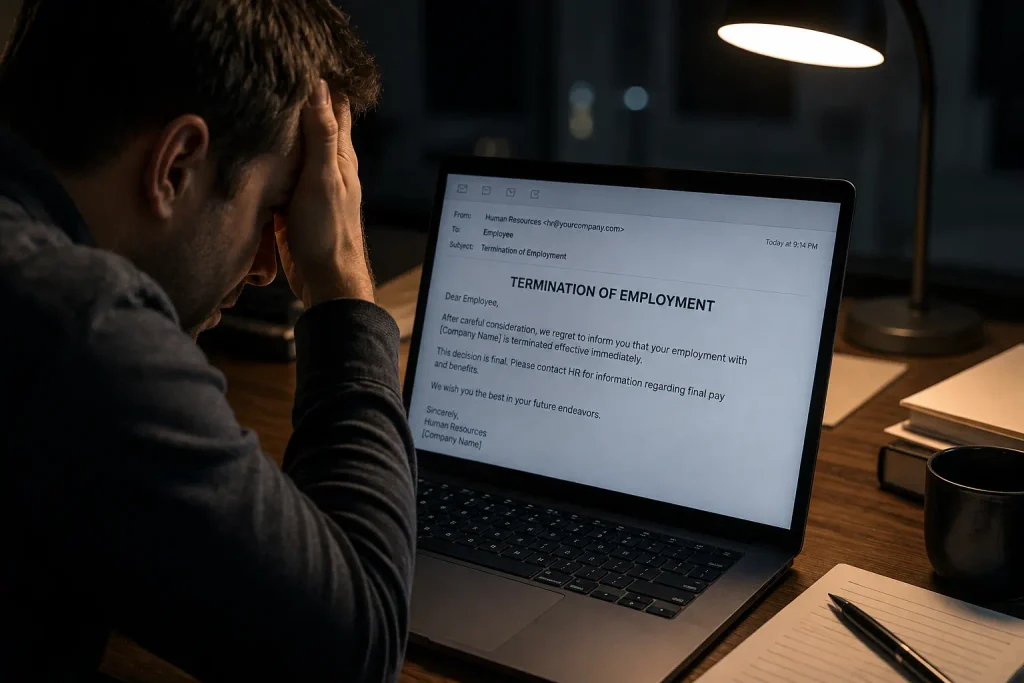
How do employers weaponize Performance Improvement Plans (PIPs) to block your benefits?
Many companies use a Performance Improvement Plan (PIP) not to help you succeed, but to build a manufactured paper trail. They attempt to reclassify ordinary poor performance as Willful Misconduct or insubordination to trigger a formal Disqualification from your state Department of Labor (DOL).
Exposing bad-faith reclassifications and the “Good Faith Effort” defense
Corporate HR departments know they cannot deny you benefits just because you missed a sales quota or fell behind on software coding. To bypass this, they dress up ordinary performance failures as “insubordination” or “willful refusal to follow instructions.”
You can defeat this trap by proving your Good Faith Effort. If you attended every shift, asked for training, worked overtime without extra pay, and genuinely tried to hit your targets, you maintained a good faith effort. Even if your output fell short, your lack of malicious intent destroys the employer’s case.
What should you write on your state unemployment application if you were fired for performance?
When filing with your State Workforce Agency, state clearly that you were discharged due to job performance or inability to meet quotas. Never admit to intentional rule-breaking, and ensure your filing aligns with your actual Base Period wage and hour calculations.
Navigating wage thresholds and base period realities
When you complete your state application, precision matters. Avoid vague emotional rants or corporate buzzwords. Keep your explanation concise and factual: “Discharged due to inability to meet production quotas despite consistent effort.”
Furthermore, your monetary eligibility relies on your base period—typically the first four of the last five completed calendar quarters prior to filing. State workforce agencies calculate your weekly benefit amount based on the actual wages reported during this window. If your hours were slashed before termination, check your state guidelines to ensure your calculations accurately reflect your full-time earnings history.
What happens during an employer appeal or contested unemployment claim hearing?
If your ex-employer contests your benefits, your case moves to a telephone hearing presided over by an Administrative Law Judge (ALJ). Because the employer carries the strict Burden of Proof, your job is to show you lacked the skill, not the willingness, to do the work.
How to prepare your evidence for an Administrative Law Judge
An employer contesting your claim means they want to avoid paying higher state unemployment insurance tax rates. During the telephone hearing governed by the Federal-State Unemployment Insurance Program, the company representative must present concrete, firsthand evidence of intentional misconduct.
If they send a manager who relies on secondhand office gossip, object to hearsay. Bring your own timeline of events, positive past performance reviews, emails where you asked for help, and documentation showing you consistently showed up and tried your best.
| Termination Reason | State UI Eligibility Status | Legal Burden on Employer |
| Simple Inefficiency / Slow Speed | Eligible | Must prove total disregard for duties |
| Missing Numerical Sales Quotas | Eligible | Must prove deliberate refusal to work |
| Willful Insubordination / Rule-Breaking | Disqualified | Must prove intentional, conscious violation |
Practical Case Study: Winning unemployment after a sudden performance termination
Consider a marketing manager who was fired after missing targets during a sudden traffic slump. Her company tried to deny her benefits for alleged insubordination. By presenting past performance reviews and proving a Good Faith Effort, her Administrative Law Judge ruled in her favor, restoring her full benefits.
Let’s look at how this plays out in reality. Marcus was hired as a logistics coordinator. After a company restructure, his workload doubled, and he began missing data-entry deadlines. His employer fired him and tried to claim he intentionally sabotaged shipments.
Marcus requested an appeal hearing. Before the Administrative Law Judge, Marcus presented email chains showing he repeatedly asked management for extra staffing, alongside his annual review praising his work ethic from the previous year. The employer had no proof of intentional sabotage—only proof that Marcus was overwhelmed. The judge ruled entirely in Marcus’s favor, fully unlocking his weekly unemployment payments.
Frequently Asked Questions (FAQ) About Being Fired for Performance
If you just lost your job and are worried about your financial survival, you need immediate answers. Below, we address critical questions about what constitutes disqualifying misconduct, how state agencies handle performance reviews, and what to do if your claim is initially denied.
Does being fired for low sales quotas count as misconduct?
No. Missing sales targets, low productivity, or failing to meet numerical quotas due to lack of skill or market conditions constitutes ordinary inefficiency, not willful misconduct. You remain fully eligible to collect unemployment benefits.
Can my employer stop my unemployment if I admit I struggled with the role?
Admitting you struggled with complex software, heavy workloads, or fast-paced deadlines does not hurt your claim. State agencies recognize that humans have different skill limits. The line is crossed only if you admit you refused to work or intentionally defied direct orders.
Disclaimer: The information provided on this website does not, and is not intended to, constitute legal advice. All information, content, and materials available on this site are for general informational and educational purposes only. Laws regarding employment and labor rights frequently change, and while we strive to keep our content updated, the information on this website may not constitute the most up-to-date legal or other information.
Use of, and access to, this website or any of the links or resources contained within the site do not create an attorney-client relationship between the reader, user, or browser and the website authors, contributors, or its owners. We are an independent publishing platform, not a law firm.
Readers of this website should contact a qualified employment attorney in their specific state to obtain advice with respect to any particular legal matter. No reader or user of this site should act or refrain from acting on the basis of information on this site without first seeking legal advice from counsel in the relevant jurisdiction. Only your individual attorney can provide assurances that the information contained herein – and your interpretation of it – is applicable or appropriate to your particular situation.
Know your rights.
References & Official Legal Resources
To verify your rights, research administrative guidelines, and understand state-level unemployment insurance standards, consult these authoritative resources:
-
U.S. Department of Labor (USDOL):
Explore federal unemployment insurance guidelines and state workforce agency directories at the USDOL Unemployment Insurance Portal. -
National Employment Law Project (NELP):
Access worker advocacy guides, policy research, and resources regarding benefit eligibility and appeals via the NELP Worker Rights Resource Center. -
Legal Information Institute (LII) – Cornell Law School:
Review statutory definitions of employee misconduct versus inefficiency under federal labor standards at the LII Federal Unemployment Insurance Overview.
Keywords: can i get unemployment if i was fired for performance, terminated for poor performance, fired for poor performance, severance if fired for performance, do you get unemployment if fired for performance, fired for poor performance unemployment, willful misconduct vs poor performance, fired for not meeting quotas unemployment, good faith effort unemployment appeal, unemployment benefits after pip termination, what to put on unemployment application fired for performance
can i get unemployment if i was fired for performance, can i get unemployment if i was fired for performance,, can i get unemployment if i was fired for performance, can i get unemployment if i was fired for performance, can i get unemployment if i was fired for performance, can i get unemployment if i was fired for performance, terminated for poor performance, terminated for poor performance, terminated for poor performance, terminated for poor performance, terminated for poor performance, terminated for poor performance, terminated for poor performance, terminated for poor performance, terminated for poor performance, terminated for poor performance, fired for poor performance, fired for poor performance, fired for poor performance, fired for poor performance, fired for poor performance, do you get unemployment if fired for performance, do you get unemployment if fired for performance, do you get unemployment if fired for performance, do you get unemployment if fired for performance, do you get unemployment if fired for performance, severance if fired for performance, severance if fired for performance, severance if fired for performance, severance if fired for performance, severance if fired for performance