
If you are preparing to resign from a toxic job, or you just got laid off, you are likely calculating every dollar you need to survive the transition. One of the biggest financial assets you hold is your Paid Time Off (PTO). You worked hard for those hours, and wondering, “do I get paid for unused vacation time when I quit?” is completely natural.
Unfortunately, corporate HR departments often try to confuse workers into leaving this money on the table. Knowing your exact rights regarding a vacation payout is your best defense against wage theft. Let’s break down exactly how state laws and your employee handbook determine your final paycheck.
Do I get paid for unused vacation time when I quit my job?
Whether you get paid for unused vacation time when you quit depends on your state laws and company policy. There is no federal law requiring payout. However, states like California and Colorado treat accrued vacation as earned wages that must be paid upon separation.
How the Fair Labor Standards Act (FLSA) leaves PTO to the states
The biggest misconception in labor law is that federal law protects your vacation time. It does not. The Fair Labor Standards Act (FLSA) regulates minimum wage and overtime, but it completely ignores PTO payouts.
The U.S. Department of Labor (USDOL) leaves the regulation of vacation pay entirely up to individual state labor boards. This means your legal right to a payout depends entirely on where you live and the specific language in your employment contract.
The three-tier state law system for PTO payouts
Because there is no federal mandate, the national landscape for PTO payouts is divided into three distinct legal tiers:
- Mandatory Payout States: States like California, Colorado, Illinois, Montana, and Nebraska treat accrued vacation time as earned wages. If you earn it, they must pay it out upon separation of employment, regardless of why you leave.
- Policy-Dependent States: In states like Texas and New York, the law dictates that the Employee Handbook or written contract governs. If the handbook promises a payout, the employer is legally bound to pay it.
- Zero Protection States: A handful of states have no laws regarding PTO, meaning employers can freely deny payouts unless a union contract says otherwise.
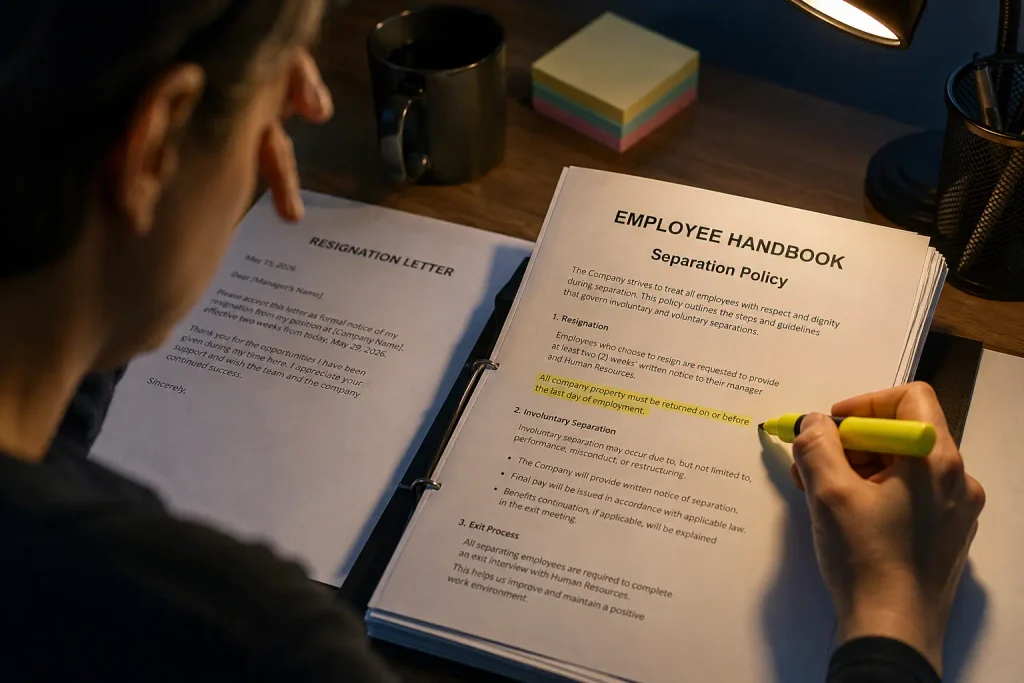
Can my employer use a “use-it-or-lose-it” forfeiture clause to deny my payout?
In highly protective states like California, Colorado, Montana, and Nebraska, use-it-or-lose-it forfeiture policies are strictly illegal because vacation is considered a vested benefit. In other states, employers can enforce these policies if they are clearly outlined in the employee handbook or your written contract.
Understanding accrual caps as a legal alternative
If you live in a state that bans “use-it-or-lose-it” forfeiture clauses, your employer cannot simply erase your unused hours on December 31st. They also cannot steal those hours when you resign.
To control costs legally, companies in these states use an accrual cap instead. An accrual cap means once you hit a certain limit (like 200 hours), you simply stop earning new time until you take a vacation. This is legal because it prevents future accrual, rather than stealing earned wages you already banked.
What happens to my payout if I work remotely in a different state?
Your PTO payout rights are governed by remote work jurisdiction—the laws of the state where you physically perform your work, not where your employer’s headquarters is located. If you work from California for a Texas company, you are entitled to California’s strict payout protections.
Defending yourself against corporate HQ policies
This is the biggest modern legal trap for workers in 2026. Remote work jurisdiction dictates that your physical location determines your labor rights.
If your company’s corporate headquarters is in Florida (where PTO payouts are not mandated), but you work from your home in Illinois (which mandates payouts), HR might try to deny your payout using Florida rules. Do not let them. You must firmly remind HR that Illinois State Department of Labor laws apply to you, and they must cut the check.
How does a combined PTO bank complicate your final paycheck?
Many modern companies bundle sick days and vacation days into a single combined PTO bank. If your state mandates vacation payouts but not sick leave, employers using a combined bank often must pay out the entire accrued balance in your final paycheck upon employment separation.
Why you should never let HR reclassify your time
To save administrative time, many HR departments combine sick leave and vacation into a single combined PTO bank. This creates a massive legal liability for the employer.
In states like California, standalone sick leave does not need to be paid out, but vacation time does. If the company pools them together, they generally lose the ability to separate them upon termination. If HR suddenly tries to retroactively reclassify half your PTO bank as “sick time” to avoid paying you, they are breaking the law.
Can a company change its employee handbook after you give two weeks’ notice?
No, an employer cannot retroactively change the employee handbook to deny your vacation payout after you resign. Accrued vacation time is a vested benefit earned under the active policy. However, some states allow conditional forfeiture clauses if you fail to work your full notice period.
Beating the two-week notice forfeiture loophole
Shady employers frequently use conditional forfeiture clauses to hold your money hostage. Their handbook might say: “Employees only receive vacation payouts if they provide a formal two-week notice and work every scheduled shift.”
If you are in a policy-dependent state, these clauses are usually perfectly legal. To protect yourself, download a PDF copy of your Employee Handbook and take screenshots of your accrued vacation time balance before you hand in your resignation. If HR changes the digital handbook the next day, you have undeniable proof of the active contract.
Practical Case Study: Securing a combined PTO payout across state lines
Consider a remote worker living in Illinois, employed by a Florida company with a combined PTO bank. When she quit, HR denied her payout citing Florida law. By filing with the Illinois State Department of Labor, she forced a full payout based on physical jurisdiction.
Let’s look at how these rules overlap in the real world. Sarah worked from her living room in Chicago (Illinois) for a marketing agency based in Miami (Florida). She had 80 hours saved in a single combined PTO bank.
When she quit, Florida HR told her she forfeited the time. Sarah knew her rights. She sent an email citing her remote work jurisdiction in Illinois, where accrued vacation is a protected wage. Because the company had bundled her sick and vacation time, they were forced to pay out all 80 hours in her final paycheck.
Frequently Asked Questions (FAQ) About Quitting and Vacation Pay
Navigating the end of your employment can be incredibly stressful, especially when thousands of dollars are on the line. Below, we address critical questions about involuntary separation, the differences between sick time and vacation, and exactly when you should receive your final wage payout.
Do I get paid for unused sick time when I quit?
Generally, no. Unless your specific city or state has a rare local ordinance mandating sick leave payouts, pure sick leave vanishes when you quit. However, if your employer uses a single combined PTO bank for all time off, you are highly likely to receive a payout for the entire balance in states that protect vacation pay.
What is the deadline for an employer to pay my unused vacation time?
The deadline to receive your payout is tied to your state’s final paycheck laws. Some states require immediate payout on your last day if you are fired. If you quit voluntarily, most states require the payout to be included in the next regularly scheduled payroll cycle following your resignation.
Disclaimer: The information provided on this website does not, and is not intended to, constitute legal advice. All information, content, and materials available on this site are for general informational and educational purposes only. Laws regarding employment and labor rights frequently change, and while we strive to keep our content updated, the information on this website may not constitute the most up-to-date legal or other information.
Use of, and access to, this website or any of the links or resources contained within the site do not create an attorney-client relationship between the reader, user, or browser and the website authors, contributors, or its owners. We are an independent publishing platform, not a law firm.
Readers of this website should contact a qualified employment attorney in their specific state to obtain advice with respect to any particular legal matter. No reader or user of this site should act or refrain from acting on the basis of information on this site without first seeking legal advice from counsel in the relevant jurisdiction. Only your individual attorney can provide assurances that the information contained herein – and your interpretation of it – is applicable or appropriate to your particular situation.
References & Official Legal Resources
To verify your rights regarding accrued vacation pay, state-specific final paycheck laws, and federal standards, please consult these authoritative resources:
-
U.S. Department of Labor (USDOL) – Vacation Leave Guidelines:
Review the official federal position on paid time off, accrual, and employment contracts at the USDOL Vacation Leave Overview. -
U.S. Department of Labor – State Labor Offices Directory:
Find your specific state labor board to check local PTO payout mandates or file an unpaid wage claim via the State Labor Offices Contacts Directory. -
Legal Information Institute (LII) – Cornell Law School:
Explore legal definitions of wages, accrued benefits, and state vs. federal jurisdiction at the LII Federal Employment Law Portal.
Keywords: do i get paid for unused vacation time when i quit ,does unused vacation have to be paid out, what happens to unused vacation time when you quit, does unused vacation get paid out, are unused vacation days paid out, pto payout when you quit, unused vacation pay state laws, use it or lose it pto legal, do i get paid for unused vacation time when i quit , remote work pto payout jurisdiction, combined pto bank final paycheck, do employers have to pay out unused vacation