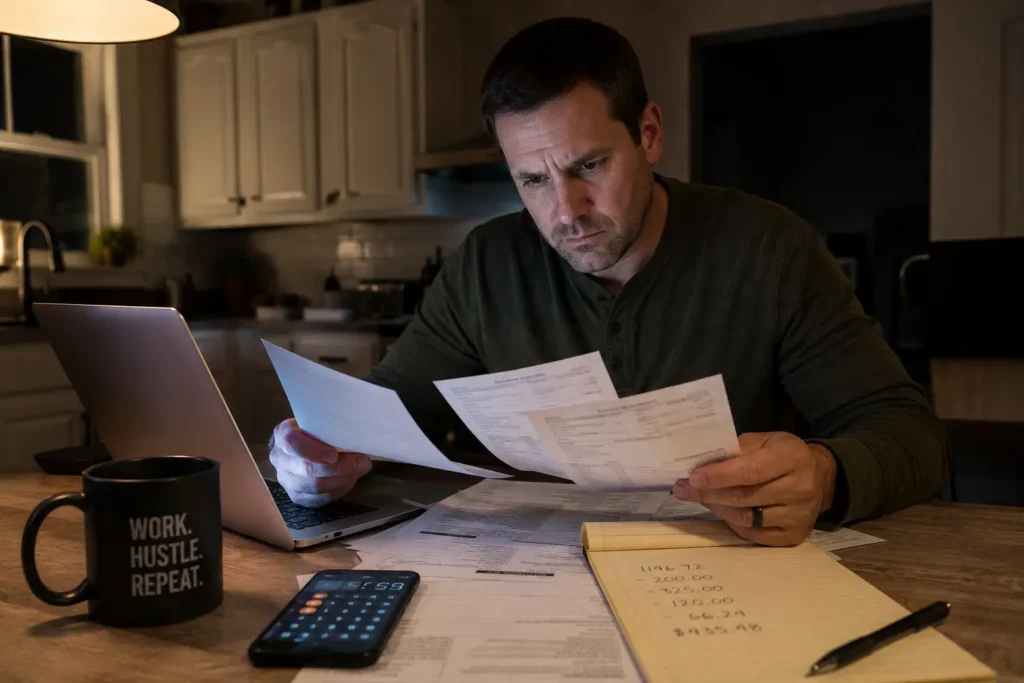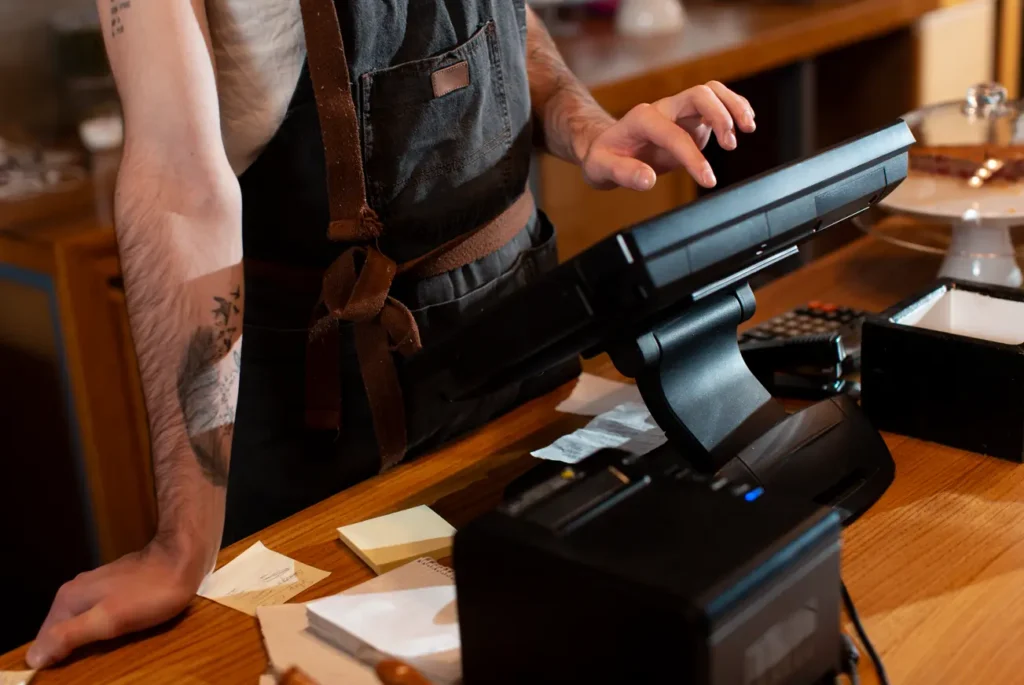
Discovering your boss took $50 or $100 out of your check for a short till is a gut-punch, especially when rent is due and you cannot afford an attorney. If you are up late searching can employer deduct cash register shortage from paycheck, you deserve a clear, honest answer right now.
Under the federal Fair Labor Standards Act (FLSA), an employer generally cannot make a cash register shortage deduction if it drops your pay below minimum wage or cuts into your overtime. Even better, in strict worker-protection states like California, New York, Illinois, and Massachusetts, docking your check for an honest register mistake is typically illegal regardless of how much you earn per hour. Below, you will find the exact federal and state rules, the math that proves when a deduction breaks the law, and a ready-to-send script to demand your money back.
Is it legal for an employer to deduct a cash register shortage from your paycheck?
Under the Fair Labor Standards Act (FLSA), an employer generally cannot make a cash register shortage deduction if it drops your effective hourly rate below minimum wage or cuts into overtime. In strict states like California and New York, shortage deductions are typically banned altogether.
The federal FLSA “Free and Clear” rule (29 C.F.R. § 531.35) and effective hourly rate math
Federal wage law treats ordinary register mistakes, customer walkouts, and broken equipment as a normal cost of running a business—not an expense your boss can shift onto your paycheck. Under regulation 29 C.F.R. § 531.35, your wages must be paid “free and clear.”
That means any deduction for a till shortage is illegal under federal law if subtracting that money pushes your effective hourly rate below the $7.25/hour federal minimum wage (or your state’s higher minimum wage floor) or reduces any 1.5x overtime pay you earned that week.
Here is how labor auditors calculate your effective hourly rate:
- Take your gross straight-time wages for the workweek (before taxes).
- Subtract the cash register shortage deduction.
- Divide the remaining amount by your total hours worked in that week.
For example, suppose you earn $8.50/hour and work 40 hours ($340.00 gross). If your manager deducts a $60.00 register shortage, your pay drops to $280.00. Dividing $280.00 by 40 hours leaves you with an effective rate of $7.00/hour—violating the $7.25/hour federal minimum wage floor. Furthermore, if you worked 42 hours that week, any register deduction is illegal under federal law because it eats into your protected overtime earnings.
Why blanket onboarding agreements fail against contemporaneous written consent rules
Managers often wave a hiring packet in your face and say, “You signed our store policy agreeing to pay for short drawers.” In most states, that blanket agreement is worthless.
Federal minimum wage and overtime rights cannot be waived by contract. Even in states that allow certain payroll deductions, laws like the Illinois Wage Payment and Collection Act (IWPCA) require voluntary, contemporaneous written consent—meaning you must freely agree in writing at the exact time of that specific shortage, not months earlier during onboarding.

Which states ban cash register shortage deductions even above minimum wage?
Several states treat register losses strictly as a business expense and prohibit till shortage deductions regardless of your hourly pay rate. California, New York, Massachusetts, and Illinois block deductions unless the employer proves intentional theft or secures voluntary contemporaneous written consent.
California Labor Code (§§ 221, 224) and New York Labor Law (§ 193) strict bans
If you work in a high-protection state, your employer cannot dock your paycheck for an honest counting error even if you earn $25.00/hour:
- California (
California Labor Code §§ 221, 224& IWC Wage Orders): California treats accidental cash shortages as an inevitable business risk. Your boss can deduct a register shortage only if they can prove the loss resulted from a dishonest, willful, or grossly negligent act—a high legal bar that simple human error does not meet. - New York (
New York Labor Law § 193): New York strictly prohibits employers from deducting wages for cash shortages, register discrepancies, spoilage, or breakage, even if the employee signs a written authorization. - Massachusetts (
M.G.L. c. 149, § 148): Massachusetts bars employers from shifting cash drawer losses onto workers via unilateral payroll deductions and imposes automatic treble (triple) damages for unlawful wage withholding.
State-by-state comparison: Strict-ban states vs. FLSA minimum-wage-floor states
Use the table below to see how your state treats register shortage deductions (note that individual case facts and local city ordinances can add further protections):
| State Jurisdiction | Can Employer Deduct an Honest Register Shortage? | Key Legal Rule or Requirement | Potential Statutory Penalty for Illegal Deduction |
| California | No | Allowed only if employer proves theft, dishonesty, or gross negligence (Cal. Lab. Code §§ 221, 224). | Full back pay + up to 30 days waiting-time pay (§ 203). |
| New York | No | Strictly prohibited under NY Labor Law § 193 even with written consent. | Full back pay + 100% liquidated damages + statutory interest. |
| Massachusetts | No | Unilateral deductions for business losses barred under the Massachusetts Wage Act. | Mandatory treble (3x) damages + attorney’s fees. |
| Illinois | Only with specific consent | Requires voluntary, contemporaneous written consent at the exact time of deduction (IWPCA). | Full back pay + 5% monthly statutory damages. |
| Texas | Only above minimum wage | Requires prior written authorization (Texas Payday Law) and cannot breach FLSA minimum wage. | Administrative wage recovery via Texas Workforce Commission. |
| Florida / Georgia | Only above minimum wage | Governed by federal FLSA (29 C.F.R. § 531.35); cannot drop pay below minimum wage or cut overtime. | Full back pay + 100% FLSA double damages (29 U.S.C. § 216(b)). |
What special rules protect shared registers, tipped workers, and salaried managers?
Employers typically cannot dock pay when multiple workers share a drawer, seize employee tips (29 U.S.C. § 203(m)) to cover short tills, or deduct shortages from a salaried-exempt manager’s fixed pay without risking the loss of their salary basis overtime exemption (29 C.F.R. § 541.602).
Shared cash drawer rules and “out-of-pocket” cash reimbursement coercion
Two common manager tactics violate federal and state wage rules almost every time:
- The Shared Cash Drawer Rule: If two cashiers, a shift lead, and a manager all rang up customers on the same register—or if nobody verified a blind opening and closing drawer count—your employer cannot prove who caused the shortage. Docking one person’s check or splitting a $60 loss across all four shift workers is generally unlawful.
- Out-of-Pocket Cash Coercion: Some supervisors avoid leaving a paper trail on your pay stub by saying, “Just pull $40 out of your wallet or Venmo me so I don’t have to write you up.” Under
29 C.F.R. § 531.35, forcing you to pay back a shortage out of pocket is an illegal “kickback” that violates the FLSA free-and-clear rule just like a payroll deduction.
Tipped employee protections (29 U.S.C. § 203(m)) and the salaried-exempt “Salary Basis” trap (29 C.F.R. § 541.602)
If you work in a restaurant, coffee shop, or retail management role, additional federal shields apply:
- Tipped Workers (
29 U.S.C. § 203(m)&29 C.F.R. § 531.52): Under federal FLSA tip-credit rules (and strict statutes like California Labor Code § 351), tips belong solely to the employees who earn them. A restaurant manager cannot raid your tip jar or tip pool to cover a short register or a “dine-and-dash” customer walkout. - Salaried-Exempt Managers (
29 C.F.R. § 541.602): To stay exempt from overtime under federal FLSA enforcement standards, a salaried manager must receive a predetermined fixed salary (at least $684/week or $35,568/year) without reductions based on the quality or quantity of work. Docking an exempt manager’s salary for a register shortage is an improper deduction that can destroy the overtime exemption—making the company liable for retroactive overtime pay.
Final paycheck deductions and 30-day statutory waiting-time penalties
Employers frequently try to sneak a register shortage deduction onto your final paycheck after you quit or get let go. In strict states, withholding any disputed amount from a final check triggers severe penalties. Under California Labor Code § 203, for example, an employer who willfully withholds final wages owes a full day’s pay for every day the check remains short, up to 30 calendar days.
What should you do if your employer deducts a cash shortage from your check?
Save your pay stub and register count sheets immediately, and remember that cashing a shorted check does not waive your claim. Send a polite written request for reimbursement to create a protected record before filing a free claim with the USDOL Wage and Hour Division.
At-will discipline vs. unlawful wage-theft retaliation (29 U.S.C. § 215(a)(3))
Before you confront your manager, understand the line between at-will discipline and illegal retaliation:
- What your boss can do: Under at-will employment in 49 states (all except Montana), your employer can legally write you up, retrain you, take you off register duty, or even fire you for making a cash-handling mistake.
- What your boss cannot do: Under Section 15(a)(3) of the Fair Labor Standards Act (
29 U.S.C. § 215(a)(3)), it is a federal offense to fire, demote, or cut your hours because you objected to an illegal wage deduction or filed a claim with a labor agency.
Also remember: depositing or cashing a docked paycheck does not forfeit your right to recover the missing money, even if your employer writes “paid in full” on the stub.
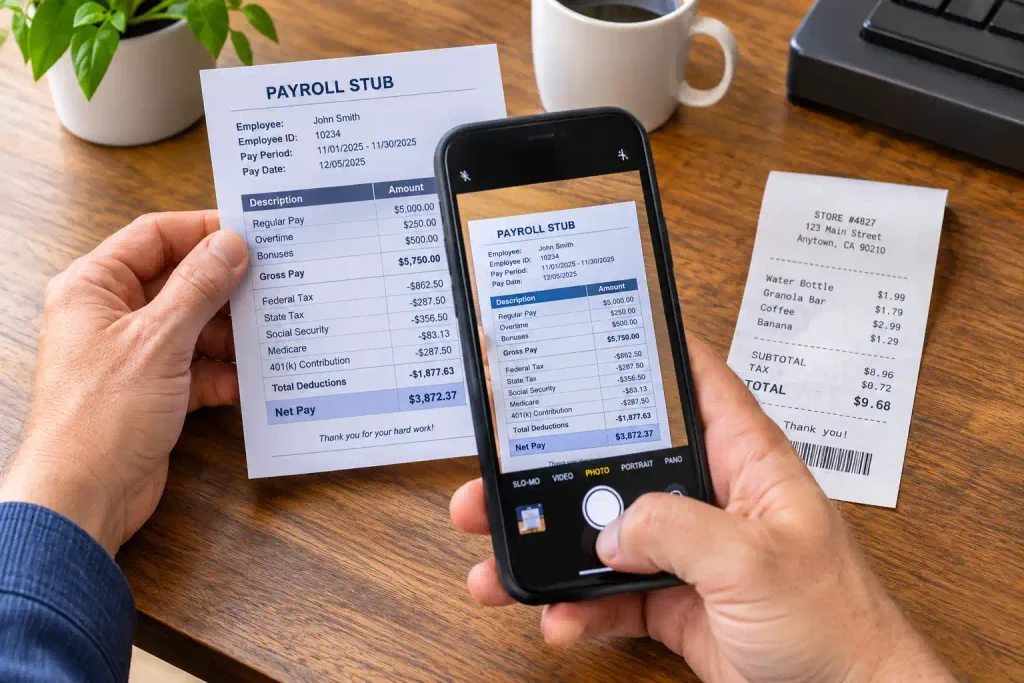
Copy-and-paste HR reimbursement script and USDOL / State Labor Commissioner filing steps
Putting your request in writing creates an immediate timestamped paper trail that protects you under federal anti-retaliation laws. Send this calm, professional email or text to HR or payroll:
Subject: Payroll Inquiry – Register Shortage Deduction on [Pay Date] Check
Hi [Manager/HR Name],
I noticed a deduction of $[Amount] labeled “[Deduction Label]” on my paycheck dated [Pay Date]. Under federal Fair Labor Standards Act guidelines (29 C.F.R. § 531.35) and state wage payment rules, cash register shortages cannot be deducted from employee wages [add if applicable: “without contemporaneous written authorization” / “in our state” / “when it reduces my effective hourly rate below minimum wage”].
Please confirm when the $[Amount] will be reimbursed on my next payroll cycle. Thank you for looking into this promptly.
Best,
[Your Name]
If the company refuses to refund the money within one pay cycle, file a free, confidential claim with the U.S. Department of Labor (USDOL) Wage and Hour Division (WHD) or your State Labor Commissioner. Under 29 U.S.C. § 216(b), federal law entitles you to recover 100% matching liquidated damages (double back pay) on top of the stolen wages.
Practical Case Study: Recovering Double Back Pay After an Illegal $65 Till Deduction
Consider a retail cashier earning $8.50/hour for a 40-hour week ($340 gross) whose boss deducted a $65 register shortage. That deduction dropped their effective hourly rate to $6.88/hour—violating the FLSA and entitling the worker to $130 in double back pay.
Here is how this plays out in real life. Marcus worked full-time (40 hours/week) at a convenience store earning $8.50/hour ($340.00 gross weekly pay). After a busy Friday night shift where two cashiers and a shift supervisor used the same register, the drawer came up $65.00 short. On payday, Marcus saw a -$65.00 “Cash Shortage” line on his pay stub, leaving him with $275.00 gross.
Marcus did the math: $275.00 ÷ 40 hours = $6.88/hour—well below the $7.25/hour federal minimum wage. He saved a photo of the shared shift schedule and his pay stub, sent a polite email to payroll citing 29 C.F.R. § 531.35, and filed an online complaint with the USDOL Wage and Hour Division when management ignored him. During the audit, the employer had to pay Marcus the $65.00 in stolen wages plus $65.00 in matching liquidated damages ($130.00 total), and refund illegal deductions to six other cashiers.
Frequently Asked Questions (FAQ) About Cash Register Shortage Deductions
Managers often claim store policies or tip-pool rules let them recoup missing register cash from workers. Below, we answer the most common questions cashiers, servers, and shift leads ask about signed policies, shared drawers, and firing risks.
Can my employer make me pay for a short cash drawer if I signed a store policy?
Generally no. A blanket onboarding handbook policy cannot waive federal FLSA minimum wage or overtime protections (29 C.F.R. § 531.35), and strict states like California, New York, and Illinois invalidate advance shortage agreements entirely.
Can my boss take money from my tips or tip jar to cover a register shortage?
No. Under federal FLSA tip regulations (29 U.S.C. § 203(m)) and state laws such as California Labor Code § 351, tips belong exclusively to the employees who earn them. Employers cannot seize tips or tip-pool money to cover short registers or customer walkouts.
Can I be fired for refusing to pay back a cash register shortage?
Under at-will employment, a boss can legally write you up or fire you for making a cash-handling mistake. However, firing or punishing you in retaliation for refusing an illegal paycheck deduction or filing a wage claim violates 29 U.S.C. § 215(a)(3) and state anti-retaliation laws.
Disclaimer: The information provided on this website does not, and is not intended to, constitute legal advice. All information, content, and materials available on this site are for general informational and educational purposes only. Laws regarding employment and labor rights frequently change, and while we strive to keep our content updated, the information on this website may not constitute the most up-to-date legal or other information.
Use of, and access to, this website or any of the links or resources contained within the site do not create an attorney-client relationship between the reader, user, or browser and the website authors, contributors, or its owners. We are an independent publishing platform, not a law firm.
Readers of this website should contact a qualified employment attorney in their specific state to obtain advice with respect to any particular legal matter. No reader or user of this site should act or refrain from acting on the basis of information on this site without first seeking legal advice from counsel in the relevant jurisdiction. Only your individual attorney can provide assurances that the information contained herein – and your interpretation of it – is applicable or appropriate to your particular situation.
Know your rights.
References & Official Federal and State Labor Sources
Verify federal minimum wage deduction rules, review state wage payment protections, and file a free, confidential back-wage complaint through these official government portals:
-
U.S. Department of Labor (USDOL) – Fact Sheet #16: Deductions From Wages for Uniforms and Other Facilities Under the FLSA:
Review federal guidelines establishing that business losses and cash register shortages cannot reduce an employee’s pay below minimum wage or cut into overtime at the USDOL Wage and Hour Division Fact Sheet #16. -
Code of Federal Regulations (29 C.F.R. § 531.35 & § 541.602) – “Free and Clear” Wages & Salary Basis Rules:
Read the exact federal regulations prohibiting unlawful kickbacks and improper deductions from salaried-exempt employees on the Official eCFR Title 29 Part 531 Portal. -
U.S. Department of Labor (USDOL) – Fact Sheet #15: Tipped Employees Under the FLSA:
Verify federal rules prohibiting employers from seizing employee tips or tip-pool funds to cover cash drawer shortages or customer walkouts at the USDOL Wage and Hour Division Fact Sheet #15. -
U.S. Department of Labor (USDOL) – How to File a Wage Complaint:
Submit a confidential unpaid wage claim to recover unlawful paycheck deductions and matching liquidated damages via the USDOL Wage and Hour Division Complaint Center. -
California Department of Industrial Relations (DIR) – Wage Deductions FAQ:
Examine strict state prohibitions against cash shortage deductions under California Labor Code §§ 221 and 224 on the California DLSE Deductions Portal.
Keywords: can employer deduct cash register shortage from paycheck, cash register shortage deduction flsa , can employer deduct cash register shortage from paycheck, can my boss make me pay for a short drawer , can employer deduct cash register shortage from paycheck, 29 cfr 531.35 free and clear wage rule, shared cash register shortage responsibility, can employer take tips to cover register shortage, illegal paycheck deductions minimum wage