
Taking legal action against the company that signs your paychecks is terrifying, especially when you are up late worrying about losing your income and cannot afford a private lawyer. If you are asking can my employer fire me for suing them, you need a direct, honest answer right away.
Generally, no. Firing you for filing a good-faith workplace lawsuit or government complaint over unpaid wages, discrimination, medical leave, or safety hazards is illegal workplace retaliation. Major federal laws—including Title VII, the Fair Labor Standards Act (FLSA), the Americans with Disabilities Act (ADA), and the Family and Medical Leave Act (FMLA)—protect your job while you enforce your rights. In fact, firing a worker who sues often gives that employee a second, even stronger retaliation claim. Below, you will find the exact legal rules, the hidden traps employers use to disguise retaliatory firings, and a practical playbook to protect your job and your case.
Is it legal for your employer to fire you for suing them?
Generally, no. Firing you for filing a good-faith lawsuit over unpaid wages, discrimination, medical leave, or workplace safety is illegal workplace retaliation under federal laws like Title VII, the FLSA, ADA, and FMLA—provided your lawsuit enforces a protected statutory employment right.
Protected statutory lawsuits vs. unrelated personal disputes (The “What Are You Suing About?” rule)
Most legal blogs stop at “No, they cannot fire you,” which leaves out a critical trap: anti-retaliation laws are statute-specific. To qualify as legally protected activity, your lawsuit or agency complaint must assert a right protected by a federal or state employment, safety, or public-policy law.
- Protected lawsuits: Suing over unpaid overtime, minimum wage theft, race or sex discrimination, sexual harassment, disability accommodations, FMLA medical leave interference, unsafe workplace conditions, or workers’ compensation benefits is strictly protected.
- Non-protected personal disputes: Suing your employer over a purely private, non-workplace matter—such as a side-business contract dispute or a personal property claim unrelated to labor statutes—generally does not trigger federal employment anti-retaliation laws under at-will employment doctrine.
Crucially, federal law relies on a good-faith filing standard. You do not have to win your underlying discrimination or wage lawsuit to be protected from retaliation. As long as you filed your lawsuit or agency charge with a reasonable, good-faith belief that your employer broke the law, firing you for suing remains illegal.
Federal anti-retaliation statutes (Title VII, FLSA, ADA, FMLA, OSHA) and state protections
Different workplace lawsuits trigger different federal and state anti-retaliation statutes. Use the table below to identify the exact law shielding your job (note that filing deadlines and available damages vary by jurisdiction and case facts):
| Type of Workplace Lawsuit or Claim | Governing Federal Anti-Retaliation Statute | Primary Enforcement Agency | Typical Retaliation Remedies Available |
| Discrimination or Harassment (Race, Sex, Religion, National Origin) | Title VII of the Civil Rights Act (42 U.S.C. § 2000e-3(a)) | U.S. Equal Employment Opportunity Commission (EEOC) | Back pay, front pay, reinstatement, emotional distress, punitive damages, attorney’s fees. |
| Unpaid Wages, Overtime, or Tip Theft | Fair Labor Standards Act (29 U.S.C. § 215(a)(3)) | U.S. Department of Labor (USDOL) Wage and Hour Division | Back pay, 100% matching liquidated (double) damages, reinstatement, attorney’s fees. |
| Disability Accommodation or Bias | Americans with Disabilities Act (42 U.S.C. § 12203) | EEOC / Federal or State Court | Back pay, front pay, compensatory damages, reinstatement, attorney’s fees. |
| Age Discrimination (Workers 40+) | Age Discrimination in Employment Act (29 U.S.C. § 623(d)) | EEOC / Federal or State Court | Back pay, liquidated (double) damages for willful violations, reinstatement, attorney’s fees. |
| Medical or Family Leave Interference | Family and Medical Leave Act (29 U.S.C. § 2615) | USDOL Wage and Hour Division / Court | Lost wages/benefits, 100% matching liquidated damages, reinstatement, attorney’s fees. |
| Workplace Safety Hazards | OSH Act Section 11(c) (29 U.S.C. § 660(c)) | Occupational Safety and Health Administration (OSHA) | Reinstatement, back pay with interest, compensatory and punitive damages (strict 30-day filing deadline). |
| On-the-Job Injury Claims | State Workers’ Compensation Anti-Retaliation Laws | State Workers’ Compensation Board / State Court | Lost wages, reinstatement, statutory penalties, and tort damages (varies by state). |
What subtle retaliation tactics and “pretextual firings” do employers use after a lawsuit?
Employers rarely admit they are firing you for suing them. Instead, they often manufacture a pretextual termination—using sudden write-ups, shift cuts, or constructive discharge—which courts treat as illegal materially adverse actions under the Supreme Court’s Burlington Northern standard.
The Burlington Northern “materially adverse action” standard and constructive discharge
Smart HR departments know that firing you the day after you serve a lawsuit looks guilty. Instead, many managers try to punish you indirectly or push you to quit. Under the U.S. Supreme Court’s landmark ruling in Burlington Northern & Santa Fe Railway Co. v. White, illegal retaliation is not limited to outright termination. It includes any “materially adverse action” that might well dissuade a reasonable worker from making or supporting a legal claim.
Common examples of illegal subtle retaliation include:
- Schedule and income sabotage: Cutting your hours from 40 to 15 per week, removing overtime eligibility, or moving you from day shifts to undesirable overnight shifts.
- Lateral demotions: Stripping away supervisory duties, key accounts, or training opportunities even if your hourly pay stays the same.
- Sudden hyper-scrutiny: Nitpicking minor arrival times or email phrasing that managers ignored before you filed your lawsuit.
- Constructive discharge (forced resignation): Making your daily working conditions, pay cuts, or hostility so intolerable that any reasonable person would feel forced to resign. In court, a proven constructive discharge is treated legally as an unlawful firing.

How courts prove pretext using temporal proximity and comparator evidence (McDonnell Douglas)
Under at-will employment doctrine, your employer can still fire you for a genuine, unrelated reason—such as documented theft, violent behavior, or a legitimate company-wide layoff. When an employer claims they fired you for “poor performance” right after you sued, courts apply the McDonnell Douglas burden-shifting framework to expose whether that excuse is a fake cover story (pretext).
Judges and juries look closely at two powerful types of proof:
- Temporal proximity (suspicious timing): If you had three years of solid performance reviews and zero write-ups—until you filed an EEOC charge or served a wage lawsuit and suddenly got three write-ups in two weeks—that tight timeline strongly indicates pretextual termination.
- Comparator evidence (double standards): If management fires you for clocking in four minutes late, while three coworkers who did not sue clocked in ten minutes late last month without receiving a single warning, your employer’s excuse collapses.
Can you keep your job while suing your employer—and what mistakes can get you fired?
Yes, you can remain employed while suing your employer, and anti-retaliation laws protect you even if you ultimately lose your underlying case. However, you must maintain strict attendance and avoid taking confidential company files, which triggers the after-acquired evidence doctrine.
The “self-help” evidence trap and the after-acquired evidence doctrine (McKennon)
When workers prepare a lawsuit while still on the payroll, they often make one devastating mistake: downloading confidential company files, customer lists, proprietary pricing sheets, or patient/HIPAA records to a personal thumb drive or Gmail account.
Courts strictly limit “self-help” evidence gathering. Taking confidential company property can give your employer a legitimate, lawful reason to fire you immediately. Worse, under the Supreme Court’s after-acquired evidence doctrine (McKennon v. Nashville Banner Publishing Co.), if your employer discovers during litigation that you stole confidential files, they can cut off your right to reinstatement and cap your back-pay damages from the date they discovered the misconduct.
Safe rule: Keep copies of your own employment records—such as your pay stubs, personal time logs, employee handbook, performance reviews, and emails or texts sent directly to you—and leave confidential business data strictly alone.
5 daily survival rules and NLRA Section 7 concerted activity shields during litigation
Follow these five practical habits every workday while your lawsuit or agency claim is active:
- Be spotless on attendance and policy: Arrive five minutes early, follow every safety and dress-code rule, and never give management an easy excuse to claim neutral discipline.
- Put every work interaction in writing: Follow up verbal instructions from supervisors with a polite email recap (“Hi [Name], just confirming you asked me to cover the closing register shift today…”).
- Save copies of positive past reviews: Download or photograph your prior performance appraisals, merit raise letters, and “employee of the month” awards on a personal device at home so HR cannot quietly bury your good track record.
- Log every retaliatory change immediately: Keep a dated journal at home recording sudden schedule cuts, excluded meetings, or hostile remarks—including exact dates, times, and witnesses.
- Know your NLRA Section 7 group shield: Under Section 7 of the National Labor Relations Act (NLRA), enforced by the National Labor Relations Board (NLRB), two or more non-union coworkers who file a joint wage lawsuit or raise collective pay/safety complaints engage in protected concerted activity, providing an extra layer of federal protection against firing.
What damages can you recover if your employer fires you in retaliation for suing?
If your employer fires you in retaliation for a protected lawsuit, you can pursue a separate unlawful retaliatory termination claim for back pay, front pay, reinstatement, emotional distress damages, statutory liquidated or punitive damages, and mandatory attorney’s fees.
Retaliation damages breakdown: Back pay, front pay, emotional distress, and punitive awards
Employers often make a catastrophic financial mistake when they fire a litigating employee. Even if a judge later decides your original discrimination or overtime claim was weak, a jury can still award massive damages if the company retaliated against you for filing it in good faith. Depending on the statute involved, remedies include:
- Back pay and lost benefits: All wages, bonuses, health insurance premiums, and 401(k) contributions lost from the firing date through trial or settlement.
- Front pay or reinstatement: Either getting your old job back (with full seniority) or receiving future lost wages if workplace hostility makes returning impossible.
- Liquidated or punitive damages: Under laws like the FLSA and FMLA, courts typically award 100% matching liquidated (double) damages on lost wages. Under Title VII and the ADA, juries can award compensatory emotional distress damages and punitive damages (subject to statutory caps based on employer size, or uncapped under many state civil rights laws).
- Mandatory attorney’s fees: Most federal and state anti-retaliation statutes force the employer to pay your lawyer’s legal fees if you win—which is why many employment attorneys take strong retaliation cases on contingency (zero upfront cost to you).
How to amend your lawsuit or file a retaliation charge with the EEOC, USDOL, or state agency
If your employer fires you or cuts your hours after you sue, act quickly because strict filing clocks apply:
- EEOC / State Civil Rights Retaliation: You generally have 180 to 300 days from the retaliatory firing to file a new EEOC retaliation charge (or amend an existing charge) before adding the retaliation claim to your federal lawsuit.
- FLSA / FMLA Wage & Leave Retaliation: You can amend your pending civil complaint directly or file a retaliation complaint with the USDOL Wage and Hour Division (generally subject to a 2- to 3-year statute of limitations).
- OSHA Safety Retaliation: Act immediately—Section 11(c) whistleblowing complaints carry a strict 30-calendar-day deadline from the retaliatory firing.
Practical Case Study: Turning a Retaliatory Pretext Firing Into a $68,000 Settlement
Consider an operations coordinator who sued for unpaid overtime and had three years of clean reviews—until management fired her 12 days after receiving the summons for a minor tardiness rule coworkers regularly broke. Temporal proximity turned her claim into a $68,000 settlement.
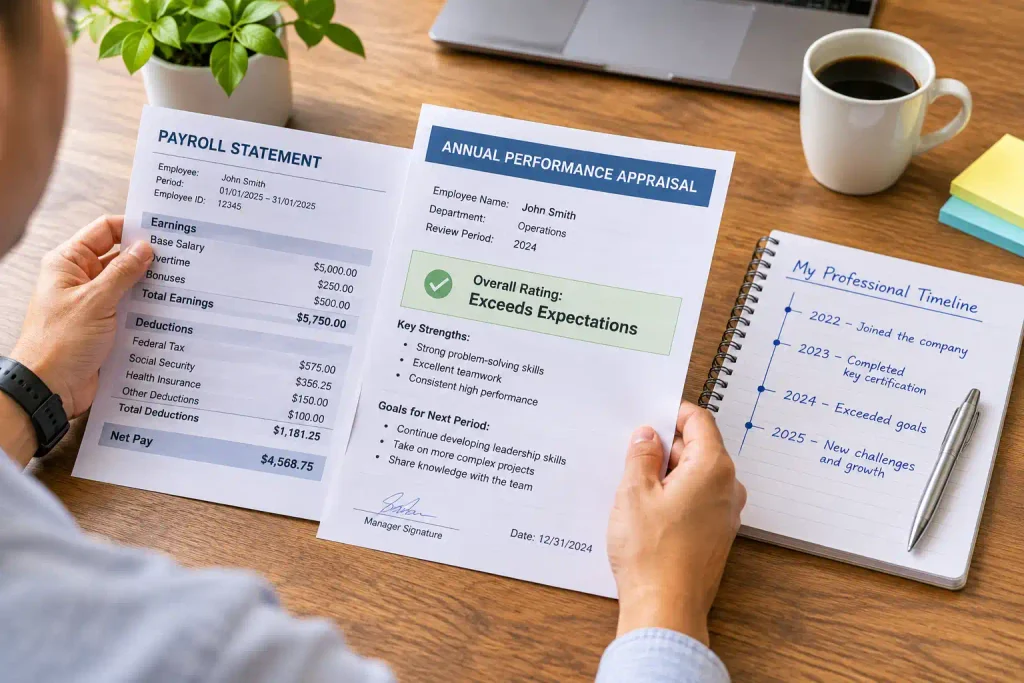
Here is how this plays out in real life. David worked as an operations coordinator earning $52,000/year while routinely working 48 hours a week without overtime pay. After HR ignored his written payroll questions, David filed an FLSA unpaid overtime lawsuit. For three straight years, David had received “Exceeds Expectations” annual reviews and zero disciplinary warnings.
Just 12 days after the company’s legal department received David’s lawsuit summons, his manager fired him for arriving six minutes late after a highway accident. David’s attorney amended his lawsuit to add an FLSA retaliation claim (29 U.S.C. § 215(a)(3)) and subpoenaed badge-swipe records showing four other coordinators had arrived 10 to 15 minutes late that same month with zero discipline. Facing clear temporal proximity, comparator evidence, and mandatory double back pay, the company settled both claims for $68,000 plus attorney’s fees.
Frequently Asked Questions (FAQ) About Being Fired for Suing Your Employer
Workers preparing a wage claim, EEOC charge, or civil lawsuit often worry about losing their livelihood before their case is heard. Below, we answer the most urgent questions employees ask about suing while employed, losing the underlying case, and at-will firing excuses.
Can I sue my employer while I still work for them?
Yes. Thousands of U.S. workers file EEOC discrimination charges, USDOL wage claims, and civil lawsuits while remaining on the payroll. Federal and state anti-retaliation laws protect your job, pay rate, and work schedule throughout the entire legal process.
What if I lose my original lawsuit—can my employer fire me then?
No. Anti-retaliation laws protect you as long as your original lawsuit or complaint was filed in good faith with a reasonable belief that your employer violated the law. Even if a court rules against you on the original claim, firing you for bringing that good-faith case remains illegal retaliation.
Can my employer fire me for an unrelated reason while my lawsuit is pending?
Under at-will employment, an employer can legally terminate you for genuine, well-documented misconduct or a legitimate company-wide layoff unrelated to your lawsuit. However, if the timing is suspicious or coworkers who broke the same rule were not fired, courts may rule that the employer’s excuse is illegal pretext.
Disclaimer: The information provided on this website does not, and is not intended to, constitute legal advice. All information, content, and materials available on this site are for general informational and educational purposes only. Laws regarding employment and labor rights frequently change, and while we strive to keep our content updated, the information on this website may not constitute the most up-to-date legal or other information.
Use of, and access to, this website or any of the links or resources contained within the site do not create an attorney-client relationship between the reader, user, or browser and the website authors, contributors, or its owners. We are an independent publishing platform, not a law firm.
Readers of this website should contact a qualified employment attorney in their specific state to obtain advice with respect to any particular legal matter. No reader or user of this site should act or refrain from acting on the basis of information on this site without first seeking legal advice from counsel in the relevant jurisdiction. Only your individual attorney can provide assurances that the information contained herein – and your interpretation of it – is applicable or appropriate to your particular situation.
Know your rights.
References & Official Federal Anti-Retaliation Sources
Verify federal workplace retaliation statutes, review filing deadlines, and submit a confidential charge through these official U.S. government portals:
-
U.S. Equal Employment Opportunity Commission (EEOC) – Questions and Answers: Enforcement Guidance on Retaliation:
Review federal rules under Title VII, the ADA, and the ADEA prohibiting employers from firing or punishing workers who file discrimination lawsuits or charges at the EEOC Retaliation Guidance Portal. -
U.S. Department of Labor (USDOL) – Fact Sheet #77A: Prohibiting Retaliation Under the FLSA:
Read official federal protections under 29 U.S.C. § 215(a)(3) shielding workers who file unpaid wage or overtime lawsuits at the USDOL Wage and Hour Division Fact Sheet #77A. -
U.S. Department of Labor (USDOL) – Fact Sheet #77B: Protection for Individuals Under the FMLA:
Verify anti-retaliation rules under 29 U.S.C. § 2615 for employees enforcing family or medical leave rights at the USDOL Wage and Hour Division Fact Sheet #77B. -
Occupational Safety and Health Administration (OSHA) – Whistleblower Protection Programs (Section 11(c)):
Check federal anti-retaliation rules and the 30-day filing deadline for workplace safety complaints on the Official OSHA Whistleblower Protection Portal. -
National Labor Relations Board (NLRB) – Protected Concerted Activity:
Learn how Section 7 of the NLRA protects union and non-union coworkers who file joint wage lawsuits or raise collective workplace complaints at the NLRB Employee Rights Portal.
Keywords: can my employer fire me for suing them, workplace retaliation firing after lawsuit , can my employer fire me for suing them, an i sue my employer while still working for them , can my employer fire me for suing them, pretextual termination temporal proximity, title vii flsa anti retaliation protections, constructive discharge after filing eeoc charge, fired in retaliation for wage claim