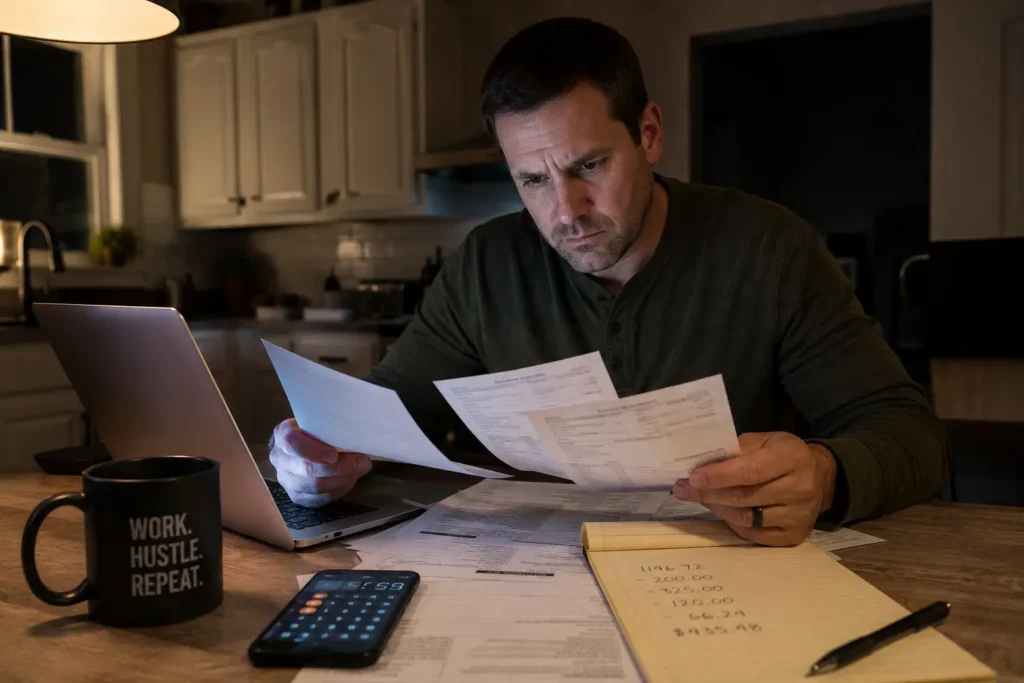
If your manager just told you to punch out on the timeclock and finish cleaning the store, or if you are quietly answering text messages for your boss after hours with zero pay, you are experiencing blatant labor exploitation. You are likely staring at your phone at midnight, exhausted and angry, asking yourself: can a job force you to clock out and keep working?
Let’s clear this up immediately. No, your employer cannot legally force you to clock out and keep working. If you are an hourly worker, making you perform uncompensated tasks is a direct violation of federal law. It is not just an annoying workplace policy; it is illegal wage theft. Let’s break down your federal protections, expose hidden corporate timecard traps, and show you exactly how to recover every penny you are owed.
Is it illegal for your employer to make you clock out and keep working?
Yes, it is entirely illegal. Under the Fair Labor Standards Act, non-exempt hourly employees must be paid for every minute worked. Forcing or pressuring you to clock out and keep working is a severe form of wage theft that violates federal law.
How the Fair Labor Standards Act (FLSA) defines compensable hours worked
The foundational law protecting your paycheck is the Fair Labor Standards Act (FLSA), a federal statute enforced by the U.S. government. Under the FLSA, non-exempt employees (hourly workers) must receive at least the federal minimum wage and overtime pay for all hours worked over 40 in a workweek.
The law defines compensable hours broadly. Any time your employer “suffers or permits” you to work counts as working time. If your boss knows you are sweeping the floor, answering a customer call, or running a closing report after punching out, the law says you must be paid for it. Intentional ignorance from management does not excuse them from paying you.
Why “Working Off the Clock” is classified as federal wage theft
When a company makes you perform duties without pay, it is called working off the clock. In the eyes of federal regulators and courts, this is outright wage theft.
Employers often try to sugarcoat it as “teamwork,” “dedication,” or “finishing up real quick.” Do not let them fool you. Labor is a transaction: if you are trading your time and energy to benefit a business, you must be compensated. Working for free is a federal crime against your financial well-being.

What are the most common sneaky ways employers force off-the-clock labor?
Employers often hide illegal labor behind modern operational tricks. Common traps include automated auto-deduct lunch breaks where you work through meals, finishing closing tasks after punching out, or answering work texts and Slack messages on your personal phone after hours.
The Auto-Deduct Lunch Break trap and uncompensated meal periods
One of the most insidious forms of wage theft in 2026 is the auto-deduct lunch break. Many modern POS (Point of Sale) and timekeeping software systems automatically deduct 30 minutes from your daily total for lunch.
The problem? Many employers schedule restaurants, warehouses, and medical offices so tightly that workers cannot actually step away. If your system automatically subtracts 30 minutes of pay, but you were forced to eat at your desk while answering phones or watching the register, that is stolen money. You worked through your meal, and that time must be paid.
Digital Off-the-Clock labor: Answering texts and checking apps after your shift
Working off the clock is no longer confined to the physical building. With remote tools and mobile communication, digital off-the-clock labor is a massive 2026 compliance epidemic.
If your boss texts you on your personal cell phone at 9:00 PM to ask where a file is, or requires you to check scheduling apps and answer Slack messages on your days off, that is compensable time. Constantly tethering hourly workers to digital devices without pay is illegal.
Why do managers force hourly workers to work off the clock?
Mid-level managers frequently force off-the-clock labor to meet rigid corporate payroll budgets. Driven by labor-cost pressures, rogue supervisors manipulate timecards to look efficient on paper, shifting the financial burden directly onto hourly workers.
Corporate payroll budgets and rogue management pressure
Why do supervisors risk breaking federal law by telling you to punch out? It almost always comes down to corporate bean-counting.
Upper management sets aggressive, unrealistic labor-cost budgets for individual stores or shifts. When a shift runs long because of unexpected customer rushes, rogue management panics over labor percentages. Instead of taking responsibility for poor staffing, they pressure hourly staff to clock out early and “finish up real quick.” They protect their corporate bonuses by stealing food off your table.
| Management Excuse | The Real Legal Reality |
| “We’re over budget, clock out but finish closing.” | Illegal Wage Theft. All hours worked must be paid under the FLSA. |
| “It’s just a 2-minute text reply, you don’t need to log it.” | Compensable Time. Micro-tasks accumulate into mandatory paid time. |
| “The system automatically deducts lunch whether you eat or not.” | Unlawful Deduction. If you work through a break, you must be paid. |
Can you recover double your money and back pay for off-the-clock hours?
Yes. Under federal law, if your employer knowingly forces you to work off the clock, you are entitled to your full back pay plus mandatory Liquidated Damages. This doubles your recovery, meaning the company must pay you 100% in statutory penalties.
Understanding FLSA Liquidated Damages and willful violation penalties
If you catch your employer stealing your wages, you do not just get back what you are owed. The FLSA provides powerful teeth through liquidated damages.
For standard violations, courts award 100% liquidated damages, effectively doubling your payout. If your employer knew they were breaking the law (or acted with reckless disregard), the U.S. Department of Labor can penalize them severely. You are entitled to every penny of your back pay plus an identical matching penalty amount.
Building an airtight paper trail with contemporaneous records
To win a wage claim, you need proof. Because rogue managers rarely leave written memos saying “please commit wage theft,” you must build your own evidence using contemporaneous records.
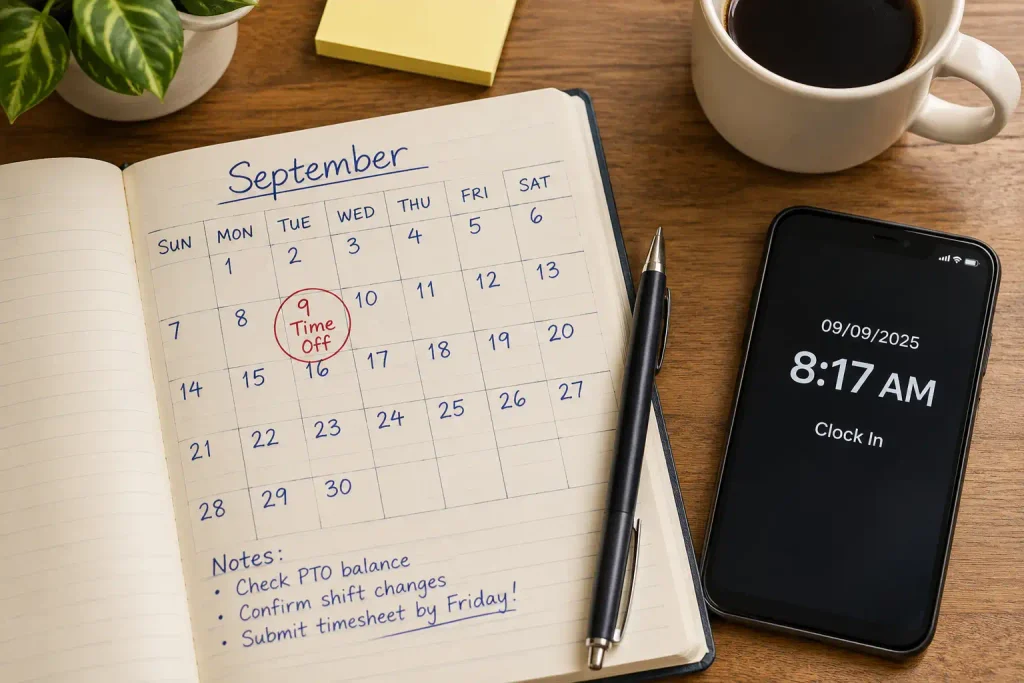
Start keeping a personal notebook or digital log outside of work. Write down the exact dates, hours worked off the clock, and the names of witnesses. Save text messages, email timestamps, security gate badge swipes, or photos showing you working after your punch-out time. This undeniable paper trail destroys any false defense your employer tries to mount.
What should you do if your boss fires or cuts your hours for refusing to work for free?
If your boss retaliates because you refused to work off the clock or demanded unpaid wages, that retaliation is strictly illegal. You can file a formal wage claim with the Department of Labor to recover your losses and penalize the employer.
Filing a wage claim with the U.S. Department of Labor Wage and Hour Division
If management threatens you, cuts your hours, or fires you because you demanded pay for all your work, you have an open-and-shut retaliation claim.
You can bypass internal HR (who often protect the company) and file a formal wage claim directly with the Wage and Hour Division (WHD) of the U.S. Department of Labor (USDOL). Federal investigators have subpoena power over timecards, security footage, and payroll records. They can audit the company and force them to pay back wages to every affected worker.
Navigating federal and state statutes of limitations to protect your claim
Time is critical when pursuing stolen wages. Under the federal FLSA, there is a strict statute of limitations.
You generally have two years from the date of the violation to recover back wages. However, if you can prove the employer’s wage theft was “willful” (which is common when managers force intentional off-the-clock punches), the window extends to three years. Do not wait too long; file your claims promptly to secure your money.
Practical Case Study: Overturning a stolen wages auto-deduct lunch trap
Consider a retail associate whose timeclock automatically deducted 30 minutes for lunch daily, even though she was forced to watch the register alone. Her attorney gathered text logs and time stamps, securing full back pay and doubled liquidated damages.
Let’s look at a real-world scenario. Marcus worked as an hourly inventory specialist at a distribution center. His employer’s timekeeping software automatically subtracted 30 minutes every shift for an unpaid lunch break. However, because staffing was chronically short, Marcus was required to monitor the shipping dock radio and answer driver questions through his lunch break nearly every day.
When Marcus calculated that he was losing over $150 a week in stolen break time, he confronted management, who dismissed him. Marcus didn’t back down. He filed a complaint with the Department of Labor, attaching text logs from his manager instructing him to stay near the dock during lunch. Federal investigators audited the facility, forcing the company to pay Marcus and 40 coworkers thousands of dollars in back pay plus mandatory liquidated damages.
Frequently Asked Questions (FAQ) About Working Off the Clock
Being forced to work off the clock is a direct violation of your rights. Below, we answer critical questions about proving unpaid hours, handling rogue managers, and filing formal wage claims with labor authorities.
Is it ever legal to do minor closing tasks after clocking out?
No. There is no legal exception for “minor” tasks. Whether it takes two minutes to wipe down a counter or twenty minutes to lock up, if you are performing job duties, you must be clocked in and paid.
How do I prove I worked off the clock if my manager altered my timecard?
You prove it using independent evidence. Save text messages, emails, location data from your phone, security badge access logs, or notes in a personal journal written on the exact days the timecard was altered.
What is the time limit for filing a wage theft claim under federal law?
Under the federal FLSA, you have a two-year statute of limitations to recover unpaid wages, which extends to three years if you can prove the employer’s wage violation was willful.
Disclaimer: The information provided on this website does not, and is not intended to, constitute legal advice. All information, content, and materials available on this site are for general informational and educational purposes only. Laws regarding employment and labor rights frequently change, and while we strive to keep our content updated, the information on this website may not constitute the most up-to-date legal or other information.
Use of, and access to, this website or any of the links or resources contained within the site do not create an attorney-client relationship between the reader, user, or browser and the website authors, contributors, or its owners. We are an independent publishing platform, not a law firm.
Readers of this website should contact a qualified employment attorney in their specific state to obtain advice with respect to any particular legal matter. No reader or user of this site should act or refrain from acting on the basis of information on this site without first seeking legal advice from counsel in the relevant jurisdiction. Only your individual attorney can provide assurances that the information contained herein – and your interpretation of it – is applicable or appropriate to your particular situation.
Know your rights.
Official Legal Resources & External Links
Do not let an employer steal your hard-earned wages or intimidate you into silence. Verify your federal protections and file formal wage complaints through these official government portals:
- U.S. Department of Labor (USDOL) – Wage and Hour Division: Learn how federal overtime and hours-worked laws protect hourly staff at the USDOL FLSA Compliance Portal.
- U.S. Department of Labor – File a Wage Complaint: Access official government forms and instructions to report wage theft and recover stolen pay via the USDOL Wage Complaint Filing Center.
- Worker.gov – Pay and Hours Protections: Explore clear, federal summaries detailing your rights regarding minimum wage, hours worked, and off-the-clock compensation at the Worker.gov Pay Protections Guide.
keywords: can a job force you to clock out and keep working, working off the clock illegal, forced to clock out and keep working, can a job force you to clock out and keep working, can a job force you to clock out and keep working, can a job force you to clock out and keep working, can a job force you to clock out and keep working, flsa wage theft off the clock, auto deduct lunch break wage theft, unpaid hours worked lawsuit, report employer to department of labor