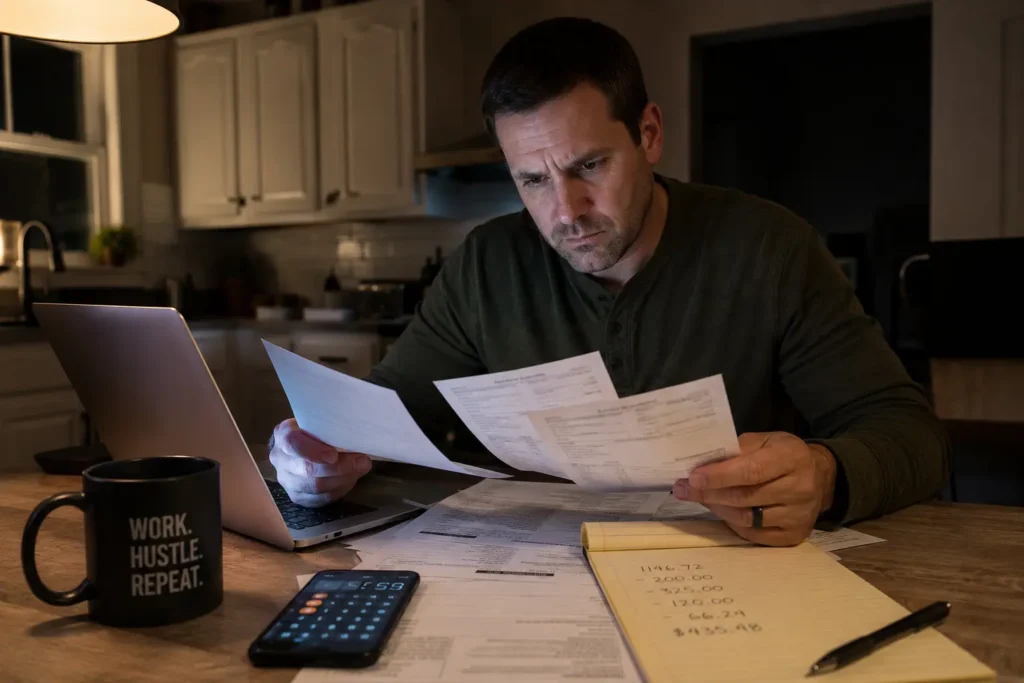
- Yes, because of at-will employment, an employer can legally cut your hours as a punishment for poor performance or breaking company rules. However, if they cut your hours to punish you for reporting harassment, taking medical leave, or demanding unpaid wages, it is highly illegal retaliation.
If you look at this week’s schedule and realize your shifts have been slashed in half, panic sets in immediately. You rely on those hours to survive. Now you are wondering: can an employer cut your hours as punishment?
The harsh reality of American labor law is that employers hold almost all the cards when it comes to scheduling. But they do not hold every card. There is a massive, legally defined line between a boss disciplining you for being late and a boss illegally retaliating against you for knowing your rights.
This 2026 legal guide breaks down exactly when an hour cut crosses the line into wage theft and retaliation. We will explain how to recognize a “constructive discharge,” how to file for partial unemployment when your paycheck shrinks, and how new Fair Workweek laws might penalize your boss for last-minute schedule changes.
Discipline vs. Retaliation: What is the legal difference?
An employer can legally cut your hours to discipline you for standard workplace infractions, like chronic tardiness or poor customer service. But if they cut your hours to punish you for engaging in a “protected activity,” it is illegal retaliation under federal law.
To fight back against a cut schedule, you must understand the difference between legal discipline and illegal retaliation.
In almost every state, you are an at-will employee. This means your employer does not guarantee you 40 hours a week. If you show up late, argue with a customer, or make mistakes on a project, your boss can legally decide to give your shifts to a more reliable coworker. That is a legal punishment.
However, federal laws like Title VII, the Fair Labor Standards Act (FLSA), and the Occupational Safety and Health Act (OSHA) protect you from retaliation. You cannot be punished for doing something you have a legal right to do.
Your boss is breaking the law if they cut your hours immediately after you:
- Report sexual harassment or racial discrimination to HR.
- File a complaint about unpaid overtime or minimum wage violations.
- Request or return from job-protected FMLA medical leave.
- Report a dangerous safety hazard to OSHA.
- Attempt to form or join a labor union.
Can an employer cut your hours to make you quit?
Yes, employers often cut hours drastically to force an employee to resign, a tactic known as “freezing out.” If the hour cuts are so severe that a reasonable person would be forced to quit, the law considers it a “constructive discharge,” treating your resignation as a legal firing.
Many toxic employers refuse to formally fire people because they do not want to pay higher Unemployment Insurance tax rates, or they fear a wrongful termination lawsuit. Instead, they try to make you miserable enough to leave on your own.
They might cut your hours from 40 down to 8 hours a week. They know you cannot pay rent on 8 hours, so you are forced to say, “I quit.”
In employment law, this is called a constructive discharge. If you are frozen out, do not just walk away in silence. Send an email to HR stating, “My hours were drastically reduced from 40 to 8 without business justification, making it financially impossible for me to continue working here.” This paper trail proves you did not leave voluntarily, which protects your right to collect unemployment benefits.
Can I collect unemployment if my hours are cut?
Yes. If your employer significantly reduces your hours through no fault of your own, you can apply for Partial Unemployment Benefits in most states. This helps bridge the financial gap between your newly reduced paycheck and your normal earnings.
Most workers assume you have to be completely fired to get unemployment. This is a myth.
If you were working full-time and your boss suddenly slashes your schedule to 15 hours a week because “business is slow,” you should immediately file a claim with your state’s Department of Labor for partial unemployment.
Each state has a specific mathematical formula, but the general rule is: if your newly reduced weekly gross income falls below your state’s maximum Weekly Benefit Amount (WBA), the state will cut you a check to make up the difference. You get to keep your job, work your reduced hours, and receive state money to survive the cut.
Do Fair Workweek laws protect me from last-minute hour cuts?
In 2026, many major cities and states enforce “Fair Workweek” or predictive scheduling laws. If you work in retail, hospitality, or fast food in these jurisdictions, your employer must give you 14 days’ advance notice of your schedule or pay you steep financial penalties for cutting your hours.
The days of a manager crossing out your name on a paper schedule the night before your shift are ending in many parts of the country.
If you live in places like New York City, Seattle, Chicago, Philadelphia, or the state of Oregon, you are heavily protected by Predictive Scheduling Laws. Under these modern laws:
- Employers must provide a written schedule 10 to 14 days in advance.
- If they cut your hours or cancel your shift after that deadline, they must pay you Predictability Pay (often half your regular rate for the hours they took away).
- They cannot hire new staff to take hours away from existing part-time workers who want more shifts.
If your boss cuts your hours at the last minute as a punishment in one of these cities, they owe you penalty pay on your next paycheck.
Can salaried employees have their hours and pay cut?
If you are a salaried, FLSA-exempt employee, your employer can reduce your required working hours, but they generally cannot reduce your weekly salary based on the quantity of work you perform. Docking a salaried worker’s pay as a punishment for a slow week destroys their exempt status.
Hourly workers suffer the most from schedule cuts, but salaried workers have unique federal protections.
To maintain your status as an “exempt” salaried employee under the Fair Labor Standards Act (FLSA), you must receive your full, guaranteed salary for any week in which you perform any work.
If business is slow on a Friday, and your boss tells you to go home at noon, they cannot deduct a half-day’s pay from your check. If they try to punish you for missing a target by docking your salary for that week, they violate federal law. The moment an employer treats your salary like an hourly wage, they lose the FLSA exemption and suddenly owe you overtime pay for every hour you worked over 40 in the past two years.
(Note: Employers can legally enact a permanent, company-wide salary reduction to avoid layoffs, but they cannot dynamically dock your pay week-to-week as a disciplinary tool).
Practical Case Study: Proving Illegal Retaliation After an Hour Cut
Understanding the timeline of events is how you win a retaliation case. A restaurant worker successfully sued for illegal hour cuts by proving “temporal proximity”—showing that her hours were slashed merely three days after she reported the kitchen for OSHA safety violations.
Let’s look at how employment lawyers prove a boss crossed the line from legal discipline to illegal retaliation.
The Situation: “David” worked 35 hours a week as a line cook. He noticed the emergency exits were routinely padlocked during busy shifts. He complained to the general manager, who ignored him. David then filed a confidential complaint with OSHA. Three days later, OSHA inspectors arrived. The very next week, David’s schedule was cut from 35 hours down to 12.
The Action: The manager claimed David’s hours were cut because of “poor attitude and slow ticket times.” David immediately filed a retaliation complaint with the Department of Labor.
The Result: The investigator used the legal concept of temporal proximity (highly suspicious timing). Because David had zero written warnings in his employee file about being “slow,” and the hour cut happened exactly 72 hours after the OSHA visit, the manager’s excuse was deemed a fake pretext. The restaurant was forced to restore David’s schedule and pay him back wages for all the hours they illegally took away.
Frequently Asked Questions (FAQ) About Reduced Hours
Can my boss reduce my work hours with no notice?
If you do not live in a city with Fair Workweek laws, and you do not have a union contract, yes. Under standard at-will employment, an employer can legally cut your hours with zero advance notice, even telling you to clock out and go home in the middle of a shift if business is slow.
Do I have to sign a new contract if my hours are cut?
In the United States, very few workers have actual employment contracts. Usually, what you sign is an “offer letter” or an employee handbook acknowledgment, neither of which is a binding contract. If they cut your hours, they are unilaterally changing your working conditions. You do not have to sign anything for the cut to take effect, but you can file for partial unemployment if the cut is severe.
What evidence should I collect if I think my hours were cut illegally?
Start a paper trail immediately. Take screenshots of your original digital schedule and the revised schedule. Print out your last six pay stubs to prove your historical average hours. Most importantly, if you engaged in a protected activity (like reporting harassment), ensure you have time-stamped emails or texts proving when you made the report to HR.
Disclaimer: The information provided on this website does not, and is not intended to, constitute legal advice. All information, content, and materials available on this site are for general informational and educational purposes only. Laws regarding employment and labor rights frequently change, and while we strive to keep our content updated, the information on this website may not constitute the most up-to-date legal or other information.
Use of, and access to, this website or any of the links or resources contained within the site do not create an attorney-client relationship between the reader, user, or browser and the website authors, contributors, or its owners. We are an independent publishing platform, not a law firm.
Readers of this website should contact a qualified employment attorney in their specific state to obtain advice with respect to any particular legal matter. No reader or user of this site should act or refrain from acting on the basis of information on this site without first seeking legal advice from counsel in the relevant jurisdiction. Only your individual attorney can provide assurances that the information contained herein – and your interpretation of it – is applicable or appropriate to your particular situation.
Know your rights.