
You just did something — sent a fax to the wrong number, emailed a file to the wrong patient, left a screen unlocked, or pasted patient notes into an AI tool without thinking. Can I Get Fired for an Accidental HIPAA Violation in 2026? Your stomach is in knots. Here’s what you need to know before your next shift. Yes, you can get fired for an accidental HIPAA violation if you’re an at-will employee — federal law doesn’t stop your employer from doing it. But in practice, most employers don’t terminate staff over a first-time, low-severity mistake. What happens to you next depends on three things: how serious the breach was, whether you’re covered by a union contract, and how fast you reported it.
That’s the blunt truth. Now let’s break down exactly why, and what you can do about it in the next hour.
Key Takeaways:
- At-will employment means your employer can legally fire you for almost anything — including an honest mistake — unless a contract or law says otherwise.
- Not all HIPAA violations are equal. Federal regulators sort them into four “tiers,” and an accident usually lands in the lowest one.
- You are almost never personally fined by the government for an accidental breach — those penalties hit your employer, not you.
- Self-reporting fast and correctly is the single biggest factor in whether you keep your job.
- Losing your job and losing your professional license are two different legal fights, with very different odds.
What Are the 4 Tiers of HIPAA Violations? (Accidents vs. Neglect)
The HHS Office for Civil Rights (OCR) — the federal agency that enforces HIPAA — doesn’t treat every privacy slip-up the same way. It sorts violations into four tiers based on how much the person or organization knew, and how much they could have prevented it.
- Tier 1 — Did Not Know: The violation happened even though reasonable care was taken, and it couldn’t have been reasonably avoided. This is where most accidents land.
- Tier 2 — Reasonable Cause: The person should have known better, but there was no willful intent to break the rules.
- Tier 3 — Willful Neglect, Corrected: The rules were knowingly ignored, but the problem was fixed within 30 days.
- Tier 4 — Willful Neglect, Not Corrected: The rules were knowingly ignored, and nothing was done to fix it.
One thing that surprises almost everyone: OCR’s civil fines apply to your employer (the “Covered Entity” or “Business Associate”), not to you personally. Employees are essentially never hit with a personal civil monetary penalty for an accident. The financial risk sits with your employer — the professional risk sits with you, in the form of internal discipline.
That’s exactly why your employer’s HR team, not the federal government, is the one deciding whether you keep your job.
| Violation Tier | What It Means | Who Usually Pays | Typical Employer Response |
|---|---|---|---|
| Tier 1 | Reasonable, unavoidable mistake | Employer (rarely; often no fine) | Retraining, verbal or written warning |
| Tier 2 | Should have known better | Employer | Written warning, formal corrective action |
| Tier 3 | Knowingly broke policy, fixed in 30 days | Employer | Suspension or termination possible |
| Tier 4 | Knowingly broke policy, never fixed | Employer | Termination highly likely, possible referral to licensing board |
What Are the Most Common 2026 HIPAA Traps? (Shadow AI & Digital Footprints)
Every generation of healthcare tech creates a new way to accidentally break HIPAA. In 2026, the traps aren’t fax machines anymore — they’re the tools sitting in your pocket right now.
The most common new-era accidental violations include:
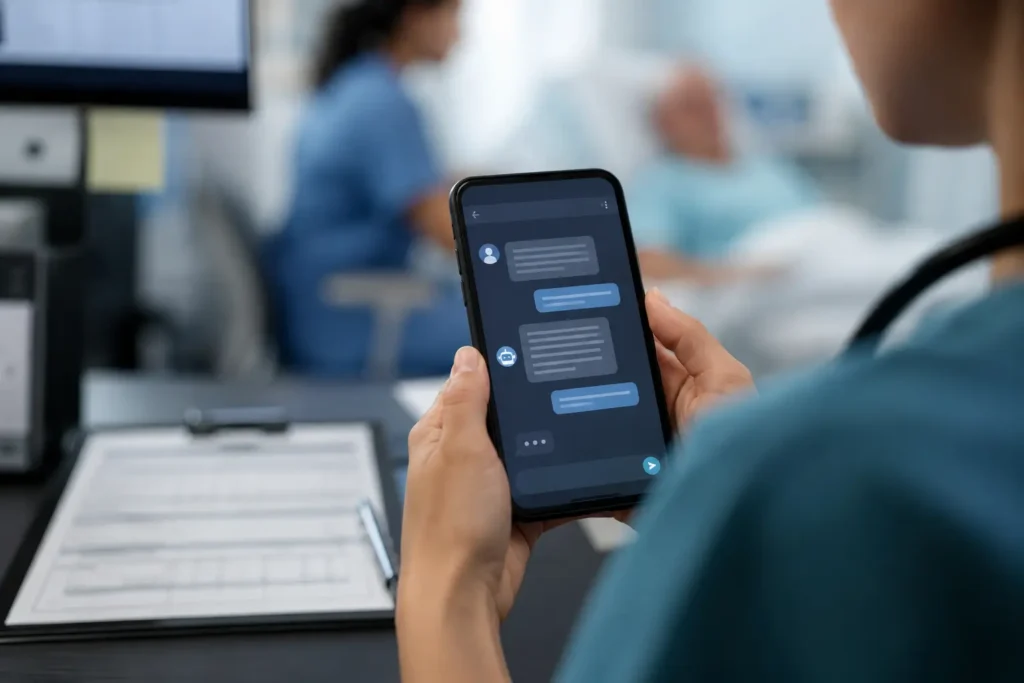
- Pasting patient details into “Shadow AI” tools. Copying notes into ChatGPT, Gemini, or another consumer AI tool to save time on a summary counts as an unauthorized disclosure of ePHI (electronic Protected Health Information) — even if you deleted it five seconds later.
- Trusting AI medical scribes that hallucinate. AI transcription and scribing tools sometimes generate inaccurate notes or misattribute information. Blindly signing off without review can create a documentation-based privacy problem.
- Screen-sharing on unapproved telehealth or video platforms. A shared screen with a patient chart visible in the background, on a personal device or unsecured app, is one of the fastest-growing sources of accidental exposure.
- Texting coworkers about a patient on a personal phone instead of a secure messaging app.
- Autofill and “reply all” mistakes in email, especially with shared inboxes.
Any tool that touches ePHI without your employer’s explicit sign-off falls outside HIPAA’s Security Rule protections — even if your intentions were purely to save time and help the patient.
Damage Control: The 3-Step Survival Plan for the “Golden Hour”
The first hour after you realize what happened matters more than almost anything else. Here’s what to do, in order.
Step 1: Secure the ePHI and Mitigate the Exposure
Act immediately to limit the exposure — don’t wait to think it through. If you sent an email, try to recall it. If you shared a screen, end the call. If you pasted data into an AI tool, delete the conversation and close the session. This satisfies what regulators call the “Minimum Necessary Standard” — showing you moved fast to contain the smallest possible exposure.
Step 2: Self-Report Using This Exact HR Script
Reporting yourself, before someone else reports you, is the single most protective thing you can do. Employers overwhelmingly respond better to voluntary disclosure than to a violation they discover on their own.
Use something close to this when you contact your supervisor or privacy officer:
“I need to report a potential HIPAA incident. At approximately [time], I [briefly describe what happened — e.g., ‘sent patient information to the wrong recipient’]. I’ve already taken steps to contain it by [action taken]. I wanted to report this immediately so we can follow proper breach protocol.”
Keep it factual. Don’t guess at intent, don’t over-explain, and don’t apologize excessively — just the facts and your containment steps.
Step 3: Document Your Training and Compliance History
Before your HR meeting, pull together your HIPAA training completion records, any past compliance acknowledgments, and a clean disciplinary history if you have one. This helps establish that you acted in good faith with no “reasonable cause” of prior negligence — a key factor OCR and employers weigh when deciding how serious a first-time mistake really is.
How Does “At-Will Employment” Affect an Accidental HIPAA Firing?
Most U.S. states follow at-will employment, meaning your employer can legally end your job for almost any reason — or no reason at all — as long as it isn’t an illegal one (like discrimination). Because most states practice at-will employment, a Covered Entity can legally fire you for an accidental HIPAA violation, even a Tier 1 mistake.
But there’s an important exception. If HR applies the rule inconsistently — firing you while letting a coworker off with a warning for the identical mistake — that inconsistency can become evidence of pretext, meaning the real reason behind your firing may be something illegal, like discrimination based on age, race, disability, or another protected category. That’s a claim you could raise with the EEOC (Equal Employment Opportunity Commission).
Keep a simple record: dates, what happened, who else made similar mistakes, and how they were treated. That record is what turns a vague sense of unfairness into an actual legal argument.
Can a Union CBA Protect You From Termination for a HIPAA Mistake?
If you belong to a union, your situation looks very different. Your Collective Bargaining Agreement (CBA) likely overrides at-will employment, and most CBAs require the employer to prove “just cause” before firing you — and to follow progressive discipline (a warning, then a written warning, then suspension, then termination) rather than jumping straight to firing.
That structure makes it much harder to fire a union employee for a first-time, Tier 1 accidental disclosure. If your union contract was ignored, you can typically file a grievance through your union rep, and in serious cases, escalate a complaint to the National Labor Relations Board (NLRB).
Check your CBA’s disciplinary section before your HR meeting — knowing your contractual rights changes how that conversation goes.
Case Study: When an “Accidental” HIPAA Firing Was Actually Wrongful Termination
Consider a composite scenario based on patterns seen across real disparate-treatment cases: A hospital nurse accidentally sent a lab result to the wrong patient portal account due to a mismatched last name in the system. She self-reported within the hour, completed a Corrective Action Plan (CAP), and retook her Privacy Rule training. Two months later, she was terminated — while a colleague who made a nearly identical mistake the same year received only a written warning.
The difference? The terminated nurse had recently returned from medical leave. She filed a disparate treatment complaint, arguing the HIPAA violation was a pretext for retaliation connected to her leave. The case settled before trial.
The lesson: an “accidental HIPAA violation” firing is sometimes really about something else entirely. If your discipline looks harsher than what others received for similar mistakes, that gap is worth documenting and raising — with an employment attorney if needed.

Job Loss vs. License Loss: Will a Mistake Ruin My Medical Career?
This is usually the scariest question in the room, and it deserves a direct answer.
Losing your job and losing your professional license are two completely separate legal processes. While an employer can fire you for a Tier 1 mistake, State Licensing Boards rarely revoke a nursing or medical license over an accidental HIPAA violation unless it involves willful neglect, malicious intent, or an attempted cover-up.
In practice, most employers handle accidental, first-time violations internally and never report them to a licensing board at all. Boards reserve suspension or revocation for cases involving repeated violations, snooping out of curiosity, selling information, or lying about what happened. A single honest mistake, self-reported and corrected, rarely rises to that level.
Losing your job hurts. It’s rarely the same as losing your ability to work in your field at all.
Frequently Asked Questions About Accidental HIPAA Firings
Can I be personally sued or fined by the OCR for a Tier 1 mistake?
No. Civil Monetary Penalties (CMPs) are assessed against your employer — the Covered Entity or Business Associate — not against you as an individual employee. You could face personal legal exposure only in rare cases involving criminal intent, like knowingly stealing or selling patient data, which is prosecuted separately by the Department of Justice.
Does my employer have to report my accidental HIPAA violation to HHS?
It depends on scope. Under the Breach Notification Rule, employers must report breaches affecting patient data to HHS, and sometimes to the affected patients directly, based on the number of people impacted and the type of data exposed. A single, contained, low-risk incident may not trigger a formal HHS report at all — your employer’s privacy officer makes that call based on a risk assessment.
Can I collect unemployment if I’m fired for an accidental HIPAA breach?
Often, yes. Most states deny unemployment benefits only for “misconduct” — defined as willful, deliberate, or reckless behavior, not an honest mistake. An isolated, good-faith error typically does not meet the legal bar for misconduct, which means you may still qualify for unemployment benefits even after termination. Rules vary by state, so file your claim and let the state agency evaluate the facts.
Will an accidental HIPAA violation show up on a background check?
Generally, no — HIPAA violations aren’t part of standard criminal background checks unless they resulted in criminal charges. A future employer might learn about the termination only if your former employer discloses the reason during a reference check.
What’s the difference between a HIPAA violation and a data breach?
A HIPAA violation is any failure to follow HIPAA’s rules — it might not involve any actual data exposure. A data breach specifically means protected health information was accessed, viewed, or disclosed without authorization. Not every violation is a breach, but every breach is a violation.
Should I talk to a lawyer before my HR meeting?
If the incident is minor and clearly accidental, most people handle the initial conversation on their own using the self-report script above. Consider talking to an employment attorney if you suspect the firing is really about discrimination, retaliation, or if your union rights were ignored.
Can I be fired for a HIPAA violation that wasn’t even my fault?
It’s possible, especially in at-will states, if your employer believes you failed to follow proper protocol — even unintentionally. This is exactly where documentation and a clear paper trail matter most in your defense.
When You DO Need a Lawyer
Most first-time, low-severity, self-reported violations get resolved with retraining and a warning — you may not need legal help at all. Consider consulting an employment attorney if:
- You were fired despite self-reporting immediately and having a clean record
- A coworker made a similar or worse mistake and kept their job
- The timing lines up with a protected leave, complaint, or pregnancy
- Your union contract’s disciplinary process wasn’t followed
- You’re being asked to sign something (like a severance agreement) before you’ve had time to review it
Many employment attorneys offer a free initial consultation for cases like this — it costs you nothing to ask.
The Bottom Line
An accidental HIPAA violation can get you fired, but it usually doesn’t — especially if you self-report fast, your history is clean, and your employer applies its policy consistently. Secure the exposure, report it yourself using a clear factual account, and document your training history before you walk into that meeting. If the discipline you receive looks harsher than what others got for similar mistakes, that’s worth writing down and, if needed, raising with an employment attorney or the EEOC.
You made a mistake. That doesn’t automatically mean you lose your career.
External Sources:
- HHS Office for Civil Rights
- U.S. Equal Employment Opportunity Commission
- National Labor Relations Board
Disclaimer: The information provided on this website does not, and is not intended to, constitute legal advice. All information, content, and materials available on this site are for general informational and educational purposes only. Laws regarding employment and labor rights frequently change, and while we strive to keep our content updated, the information on this website may not constitute the most up-to-date legal or other information.
Use of, and access to, this website or any of the links or resources contained within the site do not create an attorney-client relationship between the reader, user, or browser and the website authors, contributors, or its owners. We are an independent publishing platform, not a law firm.
Readers of this website should contact a qualified employment attorney in their specific state to obtain advice with respect to any particular legal matter. No reader or user of this site should act or refrain from acting on the basis of information on this site without first seeking legal advice from counsel in the relevant jurisdiction. Only your individual attorney can provide assurances that the information contained herein – and your interpretation of it – is applicable or appropriate to your particular situation.
Know your rights.