
If you are wondering, “can my employer disclose my salary to other employees,” the short answer might frustrate you. While it feels like a massive invasion of privacy, federal law generally allows private employers to disclose what you make. Your paycheck is not protected like your medical records.
However, just because it is legal under federal law does not mean your boss can weaponize your salary without consequences. In this guide, we will break down exactly when employer disclosure crosses the line into illegal territory, how your company’s internal handbooks protect you, and what new 2026 pay transparency laws mean for your financial privacy.
Is there a federal law that prevents your employer from disclosing your salary?
No. There is no overarching federal privacy law that prevents a private sector employer from disclosing your salary to other employees. Unlike medical records, which are protected by HIPAA, your compensation details are generally considered company information, not legally protected private data.
Understanding the At-Will Employment Doctrine and Pay Secrecy
Most American workers fall under the at-will employment doctrine. This baseline labor law means that the employer-employee relationship is highly flexible. In the private sector, unless a specific contract or state law says otherwise, management has broad discretion over how they handle internal data.
Pay secrecy is a two-way street. While companies often want to keep salaries quiet to prevent workers from demanding raises, there is no federal statute that forces a manager to keep your specific pay a secret from your peers.
The National Labor Relations Act (NLRA) Protects You, Not Your Privacy
Many people confuse their own rights with their employer’s restrictions. Under the National Labor Relations Act (NLRA), you have the absolute right to discuss your own pay with coworkers. This is called protected concerted activity.
However, the NLRA protects your right to talk. It does not forbid the employer from talking. If you search online, you will see many articles mentioning the NLRA—but they fail to explain that this law restricts companies from silencing workers, not the other way around.
When is it officially illegal for a boss to disclose your pay to coworkers?
It becomes illegal for an employer to disclose your salary when it violates a specific contractual agreement or when the disclosure is used to discriminate against you based on a protected class (like race, gender, or age).
Breach of Contract and Non-Disclosure Agreements (NDAs)
If you have a specific employment contract, executive agreement, or a reciprocal Non-Disclosure Agreement (NDA) that explicitly guarantees your compensation privacy, your employer cannot leak your salary. Doing so constitutes a breach of contract.
This is rare for standard rank-and-file workers but common for executives or specialized contractors. If you fall into this category, a manager leaking your pay is a direct legal violation that you can challenge in civil court.
Wage Discrimination and Equal Employment Opportunity Commission (EEOC) Violations
Your salary cannot be disclosed as a weapon of discrimination. If a manager reveals your pay specifically to humiliate you because of your gender, race, or age, it becomes a federal issue.
This violates the guidelines of the Equal Employment Opportunity Commission (EEOC) and potentially the Equal Pay Act of 1963. For example, if a manager intentionally exposes a female worker’s lower salary to her male peers to demean her, this crosses the line from a privacy issue into actionable wage discrimination and workplace harassment.
Do public sector employees have salary confidentiality compared to the private sector?
No. If you work in the public sector (for a city, state, or the federal government), your salary is generally a matter of public record. Anyone can look up what you make. Public employees have virtually zero salary confidentiality compared to the private sector.
The Freedom of Information Act (FOIA) and State Public Records Laws
Government salaries are funded by taxpayers. Because of this, laws like the federal Freedom of Information Act (FOIA) and equivalent State Public Records Laws require total financial transparency.
If you are a public school teacher, a police officer, or a DMV clerk, your exact name, job title, and salary are likely published in a publicly accessible online database every year. There is no legal recourse to hide this information.
How do 2026 Pay Transparency Laws affect your current salary privacy?
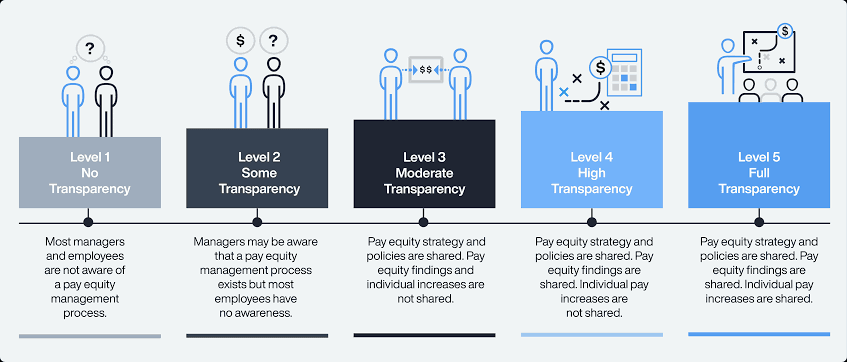
As of 2026, 18 U.S. states—including California, New York, Colorado, and recently Massachusetts and Minnesota—have enacted mandatory pay transparency laws. These laws force companies to publicly post salary ranges for open jobs, which effectively erodes the traditional pay secrecy of current employees.
Salary Range Mandates and the Evolution of Salary History Bans
These new pay transparency laws and salary range mandates mean that your coworkers can easily deduce your approximate salary. If your company posts a listing for your exact job title, everyone in the office can see the pay band.
Furthermore, over 20 states now enforce salary history bans, prohibiting employers from asking candidates about their past pay. While these laws are designed to close the wage gap and fight pay disparity, they create a paradox: the push for systemic transparency is permanently ending individual compensation privacy.
Practical Case Study: How to legally stop a manager from weaponizing your salary information.
Let’s look at how to handle this in the real world. Even if federal law doesn’t stop your boss from talking, internal company policy almost certainly does.
The Scenario: A Manager Leaks Pay to Cause Workplace Friction
Mark works in IT in Texas (a state without strict pay transparency laws). He recently received a significant raise. His manager, upset that Mark didn’t work unpaid overtime over the weekend, casually mentioned Mark’s new, higher salary to his coworkers during a meeting.
The manager’s goal was to breed resentment and cause workplace friction. Mark feels violated and angry, but a quick Google search tells him his boss didn’t technically break federal law. What can Mark do?
The Resolution: Leveraging the Employee Handbook and Internal HR Grievance Protocols
Mark needs to bypass federal law and use internal corporate law. He should immediately review his Employee Handbook or Code of Conduct. Almost all mid-to-large companies classify employee compensation as “Confidential Business Information” for HR and management purposes.
Mark’s next steps:
- Document the leak: He writes down the time, date, and witnesses of the manager’s comment.
- File an internal HR grievance: He submits a formal complaint to Human Resources stating, “My manager violated the company Code of Conduct regarding confidential personnel data by weaponizing my salary information to create a hostile work environment.”
- Demand intervention: HR is forced to act to protect the company’s internal protocols, resulting in disciplinary action against the manager.
Frequently Asked Questions: Defending your compensation privacy.
Can I get fired for discussing my own pay with coworkers?
No. Under the National Labor Relations Act (NLRA), enforced by the National Labor Relations Board (NLRB), discussing your wages, bonuses, and working conditions with colleagues is legally protected. Your employer cannot fire, demote, or discipline you for sharing your own salary information.
Are salary confidentiality clauses in my contract actually legal?
For rank-and-file employees, no. If your employer forces you to sign a contract stating you will be fired if you discuss your pay, that clause is generally illegal and unenforceable under the NLRA. However, managers and HR staff who handle payroll do have a legal duty to keep others’ compensation confidential.
What should I do if HR refuses to address a manager leaking my compensation?
If your manager’s disclosure creates a severely hostile work environment, and internal HR protocols fail you, document everything in writing. If the leak was tied to discrimination (race, gender, etc.), you can escalate by filing a formal charge with the EEOC or your State Department of Labor (State DOL).
Taking Control of Your Workplace Privacy
Discovering that your employer can legally disclose your salary to other employees is incredibly frustrating. The system is designed to protect the company, not your privacy. But you are not powerless.
By understanding the difference between federal laws and internal HR protocols, you can fight back against toxic management tactics. If a boss weaponizes your paycheck to turn your coworkers against you, use the company’s own handbook to shut them down.
Official Resources and Legal References
To further understand your rights regarding compensation privacy, pay transparency, and workplace laws, please consult the following official government and human resources organizations:
- National Labor Relations Board (NLRB): Official federal guidelines explaining your legal right to discuss wages and working conditions under Protected Concerted Activity.
- U.S. Equal Employment Opportunity Commission (EEOC): Information on how to identify and file a charge regarding Equal Pay and Compensation Discrimination.
- U.S. Department of Labor (DOL): Federal resources on Equal Pay Protections and links to your specific State Labor Office.
- National Conference of State Legislatures (NCSL): A comprehensive, up-to-date database tracking state-level Pay Transparency and Equal Pay Laws across the United States.
- Society for Human Resource Management (SHRM): The leading authority on workplace standards, providing insights into HR compliance and employee handbook policies regarding confidential business information.
Disclaimer: This article is for informational and educational purposes only and does not constitute formal legal advice. Always consult with a qualified employment attorney or your state’s labor board regarding your specific workplace situation.
Keywords: can my employer disclose my salary to other employees, is salary confidential by law, can boss tell coworkers my pay, NLRA wage discussion rights, employer leaking salary to coworkers, pay secrecy laws 2026, pay transparency laws 2026, protected concerted activity NLRB, breach of contract salary disclosure, EEOC wage discrimination, public sector salary disclosure laws, HR grievance manager leaked salary