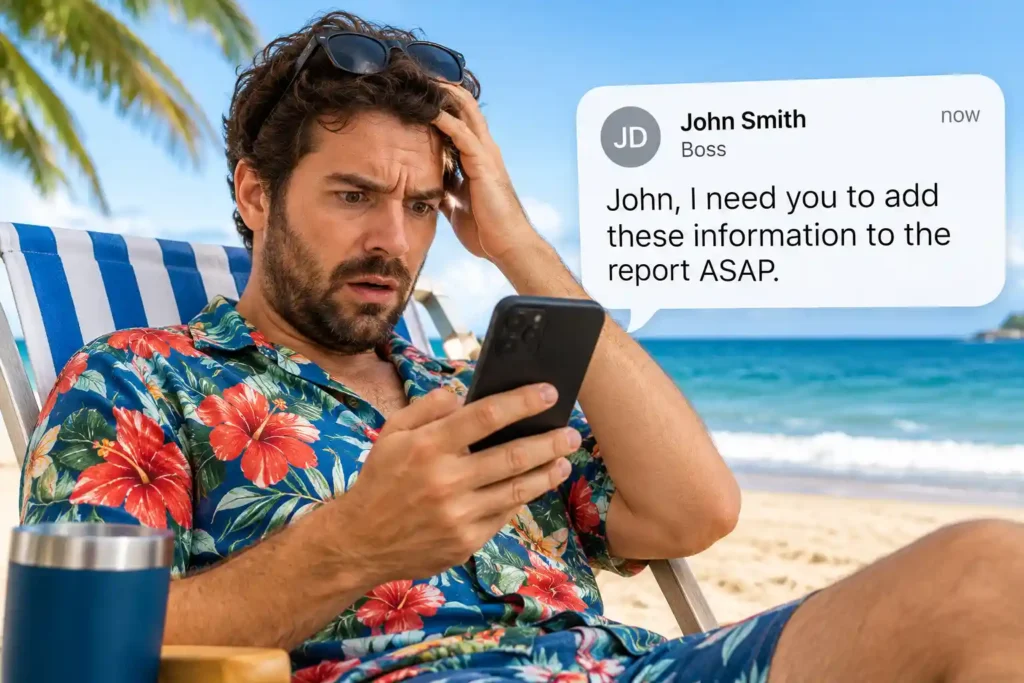
If your phone buzzes at 9:00 PM on your Saturday off with a work text demanding shift coverage or file updates, and your stomach immediately drops with anxiety, you are not alone. You are likely staring at your screen late at night, asking yourself the burning question: can my boss text me on my day off?
Let’s clear up the legal reality right away. Under federal law, there is no absolute ban stopping an employer from sending an off-hours communication on your day off. However, if you are an hourly worker, answering those messages without pay is illegal. Let’s break down your workplace boundaries, expose digital wage theft, and show you how to reclaim your personal time without risking your job.
Is it legally permissible for your boss to text you on your day off?
Generally, federal law does not ban employers from sending an off-hours communication on your day off. However, if you are an hourly worker, answering work texts constitutes compensable time. Unpaid digital messaging is a subtle form of digital wage theft.
The legal boundaries of after-hours employer contact
When it comes to pure federal law, managers enjoy broad freedom. There is no blanket statute that makes after-hours texting illegal.
However, freedom to text does not equal freedom to exploit. The legality depends entirely on your worker classification and what the text actually requires you to do. Maintaining strict workplace boundaries is essential, but understanding how the law views digital communication is your first line of defense.
Distinguishing between hourly and salaried employee obligations
Your legal rights change drastically depending on how you are paid:
- Salaried (Exempt) Employees: If you are classified as exempt under the Fair Labor Standards Act, your salary covers your responsibilities, which often include responding to after-hours communications.
- Hourly (Non-Exempt) Employees: If you are an hourly worker, you are paid strictly for hours worked. Management cannot treat your personal time as a free extension of the workday.
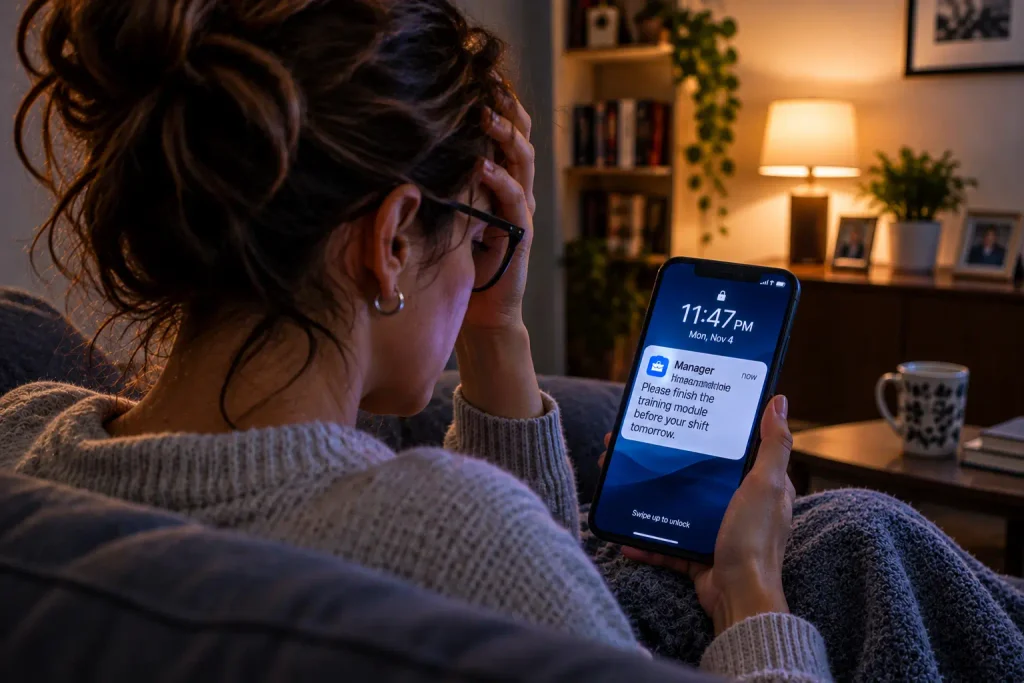
Do you have to get paid if you answer work texts during your personal time?
Yes. Under federal law, non-exempt hourly staff must be paid for every minute worked. Reviewing and replying to work texts off the clock creates compensable time. Accumulating these micro-tasks without pay constitutes illegal digital wage theft under the FLSA.
Why answering texts off the clock constitutes compensable hours worked
Many employers assume that firing off a quick text query doesn’t count as “real work.” Federal labor investigators completely disagree.
Under the Fair Labor Standards Act (FLSA), any time your employer suffers or permits you to work must be compensated. If a manager texts you a question about inventory or client files and you spend five minutes looking it up and replying, that is compensable time / hours worked. Doing it for free is a violation of federal wage laws.
Tracking micro-tasks and recovering uncompensated digital labor
Over the course of a month, answering quick texts, checking group chat schedules, and approving logs on your phone accumulates into hours of unpaid labor.
This modern trap is known as micro-tasks / digital wage theft. To protect yourself, keep a contemporaneous log of every work text received on your days off, noting the exact minutes spent replying. This paper trail is your proof when demanding back pay.
| Worker Classification | After-Hours Text Rules | Compensation Requirement |
| Salaried (Exempt) | Routine contact permitted by job scope. | Covered by fixed salary (no overtime). |
| Hourly (Non-Exempt) | Permitted, but triggers legal obligations. | Must be paid for every minute spent replying. |
| On-Call / Standby | Restricted personal freedom. | Entitled to on-call pay if heavily restricted. |
When does standby texting cross into mandatory “on-call pay”?
If your boss texts you demanding coverage while requiring you to stay sober, wait by your phone, and respond instantly, you may be entitled to on-call pay. Under federal standards, being heavily restricted during personal time converts ‘waiting to be engaged’ into paid time.
Understanding the “Engaged to Wait” legal standard for digital availability
There is a massive legal difference between a boss casually asking a question and a boss locking you into digital standby.
If management texts you on your day off and orders you: “Stay by your phone, keep your uniform ready, and reply within 5 minutes if we call you for a shift,” your personal freedom is severely compromised. Under federal wage standards, this places you “engaged to wait,” meaning you are legally on duty and entitled to on-call pay.
Emerging 2026 right to disconnect standards and international models
As remote work and digital communication dominate modern employment, the legal landscape is evolving rapidly.
Inspired by international right to disconnect laws that penalize companies for contacting workers after hours, several U.S. states and municipal labor boards have introduced bills restricting mandatory digital availability. While federal law still lags behind, the legal momentum is shifting toward punishing intrusive, 24/7 employer communication.
What should you do if management retaliates because you ignored a text?
If your manager cuts your hours or gives you poor shifts because you failed to answer texts on your day off, that subtle retaliation is unlawful. You can document the hostility and file a wage claim with the Wage and Hour Division.
Spotting subtle retaliation and ghost-punishment for unresponsiveness
What happens when you finally stop answering work texts on your Sunday off? In toxic workplaces, management might not fire you outright; instead, they engage in subtle retaliation / ghost-punishment.
You might suddenly notice your weekly hours slashed, your shifts moved to undesirable weekend closing times, or your pleasant desk assignment swapped for heavy labor. This covert retaliation is designed to punish you for asserting your personal boundaries.
Filing a complaint with the Wage and Hour Division (WHD)
If subtle retaliation crosses into unlawful demotion, hour-cutting, or wrongful termination, you do not have to swallow the abuse.
You can bypass hostile local managers and file a formal retaliation or wage complaint directly with the Wage and Hour Division (WHD) of the U.S. Department of Labor (USDOL). Federal investigators have the power to audit company communications and penalize employers who punish workers for refusing unpaid digital labor.
Practical Case Study: Stopping intrusive after-hours texts at a retail firm
Consider an hourly associate constantly harassed by late-night scheduling texts on her days off. After tracking her micro-task hours and presenting an FLSA back-pay demand backed by union contract rules, management halted off-hours messaging permanently.
Let’s look at how a worker successfully pushed back. Jessica worked as an hourly inventory specialist at a major retail warehouse. Her department manager had a habit of texting team members late at night with urgent questions about stock counts or shift swaps, expecting immediate replies.
When Jessica ignored a text sent at 11:00 PM on her day off, her manager threatened to write her up for insubordination. Jessica did not back down. She printed out three months of text logs showing over 15 hours of uncompensated digital labor, referenced her rights under the Fair Labor Standards Act, and submitted a formal grievance citing her collective bargaining agreement (CBA) rules. HR intervened, reprimanded the manager for illegal off-the-clock demands, and instituted a strict company policy banning non-emergency after-hours texts to hourly staff.
Frequently Asked Questions (FAQ) About Texting on Your Day Off
Navigating digital communication boundaries with management can be stressful. Below, we answer critical questions about firing risks, hourly pay rights, and professional scripts to stop after-hours work texts.
Can my boss fire me for not answering text messages on my day off?
If you are an hourly (non-exempt) worker off the clock, firing you simply for refusing to perform unpaid labor violates public policy and wage laws. However, in at-will states, rogue managers often mask retaliation behind fake performance excuses, making contemporaneous documentation vital.
How can I politely tell my boss not to text me on my personal time?
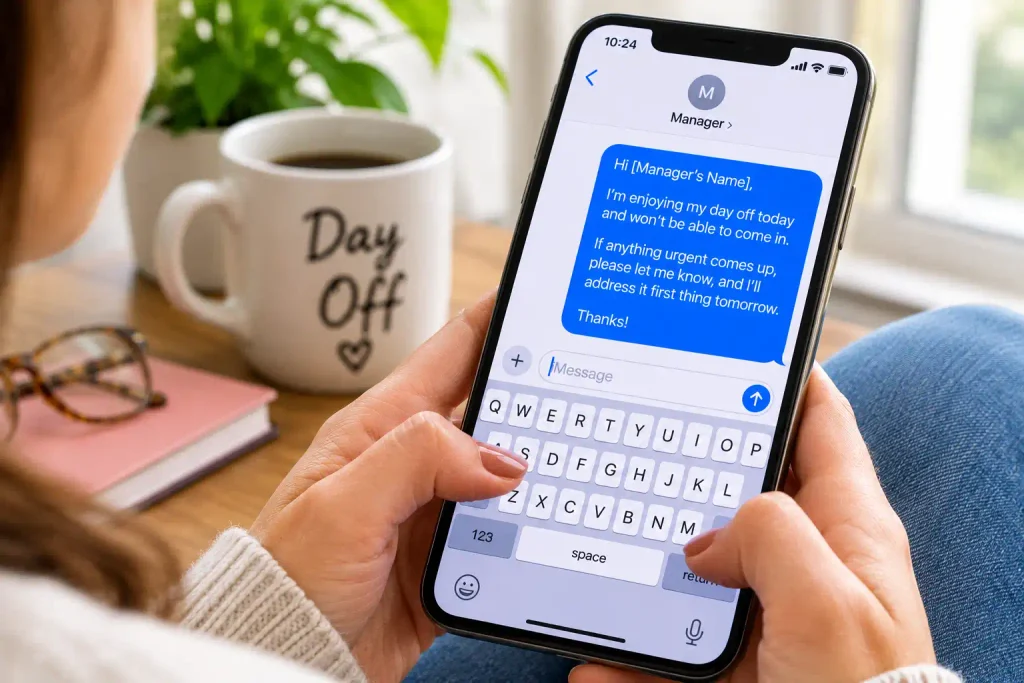
Send a clear, professional message during your next working shift: “Hi [Name], I want to be fully responsive during my shifts, but I keep my phone on silent on my days off to rest and disconnect. Moving forward, please send any scheduling or work requests during my scheduled working hours so I can address them promptly.”
Do union contracts or collective bargaining agreements restrict after-hours contact?
Yes. If your workplace is unionized, your collective bargaining agreement (CBA) frequently contains strict clauses regulating standby time, minimum call-in pay, and bans on uncompensated after-hours contact. Check your union handbook immediately.
Disclaimer: The information provided on this website does not, and is not intended to, constitute legal advice. All information, content, and materials available on this site are for general informational and educational purposes only. Laws regarding employment and labor rights frequently change, and while we strive to keep our content updated, the information on this website may not constitute the most up-to-date legal or other information.
Use of, and access to, this website or any of the links or resources contained within the site do not create an attorney-client relationship between the reader, user, or browser and the website authors, contributors, or its owners. We are an independent publishing platform, not a law firm.
Readers of this website should contact a qualified employment attorney in their specific state to obtain advice with respect to any particular legal matter. No reader or user of this site should act or refrain from acting on the basis of information on this site without first seeking legal advice from counsel in the relevant jurisdiction. Only your individual attorney can provide assurances that the information contained herein – and your interpretation of it – is applicable or appropriate to your particular situation.
Know your rights.
References & Official Legal Resources
Do not let an employer exploit your personal time with uncompensated text messaging. Verify your federal wage rights, hours-worked guidelines, and formal complaint procedures through these official government portals:
-
U.S. Department of Labor (USDOL) – Hours Worked Guidelines:
Review federal standards regarding compensable time, off-the-clock labor, and digital work requirements under the Fair Labor Standards Act at the USDOL Hours Worked Compliance Portal. -
U.S. Department of Labor – Filing a Wage Complaint:
Access official federal forms, instructions, and agency reporting tools to file claims for unpaid digital labor and wage theft via the USDOL Wage Complaint Filing Center. -
Worker.gov – Pay and Overtime Protections:
Explore clear federal summaries detailing employee rights to fair compensation, overtime pay, and protections for all hours worked at the Worker.gov Pay Protections Guide. -
U.S. Department of Labor – State Labor Offices Directory:
Locate your specific state department of labor to review local right-to-disconnect rules, state wage statutes, and local protections at the USDOL State Labor Office Directory.
keywords: can my boss text me on my day off, is it legal for boss to text on day off, do hourly workers get paid for answering texts, flsa compensable time text messages, boss messaging me outside of work hours, can my boss text me on my day off, can you get fired for not answering work texts, right to disconnect work text laws