
If you just opened your paycheck stub, noticed your hourly rate or salary was suddenly slashed without a word from management, and felt your heart drop into your stomach, you are not alone. You are likely sitting in the dark late at night, asking yourself the burning question: can an employer reduce your pay without notice?
Let’s tackle the hard legal truth right away. In most cases, under the rules of at-will employment, companies can lower your future pay without advance warning. But there is a massive catch: they can never touch money you have already earned, and many states strictly require written notice. Let’s break down your rights, expose illegal wage theft traps, and show you how to protect your hard-earned income.
Is it legal for an employer to lower your wages without advance notice?
Generally, yes, under the At-Will Employment Doctrine, employers can reduce your future pay rate without warning. However, any Wage Reduction / Pay Cut must be Prospective vs. Retroactive—meaning it can only apply to future work, never to hours you have already worked.
How the at-will employment doctrine governs prospective wage changes
In 49 states, your job operates under the at-will employment doctrine. This means your employer has the legal right to alter the terms of your employment—including your compensation rate—at any time.
When management decides to implement a wage reduction / pay cut, they do not necessarily need your written consent or advance notice under federal law. They are simply changing the terms of your employment going forward. If you choose to keep working after the change takes effect, the law assumes you accepted the new rate for future hours.
The absolute illegality of retroactive pay cuts and wage theft
While forward-looking pay cuts are legal in at-will states, looking backward is strictly illegal.
An employer cannot announce a pay cut at the end of the pay period and apply it to hours you already worked last week. Doing so constitutes a retroactive wage reduction. Under federal labor standards, reducing your pay for completed work is direct wage theft. If your employer alters your rate after you completed the shift, they are in direct violation of the law.

What are the strict legal floors that limit how low your pay can be cut?
Even when an employer slashes your wages, they cannot drop your compensation below statutory limits. Every reduction must respect federal Minimum Wage and Overtime Floors, and comply with federal Salary Basis Test thresholds for exempt professional workers.
Protecting wages with federal, state, and local minimum wage floors
An employer’s power to cut your pay is not infinite. No matter how desperate a company claims to be, they are bound by absolute statutory floors.
Your new reduced pay rate can never drop below the federal, state, or local minimum wage. If you are an hourly worker making $18 an hour and your boss suddenly cuts your pay to $7.00 an hour, that cut violates federal minimum wage and overtime floors, exposing the company to severe federal penalties.
The FLSA salary basis test and exempt employee protection traps
If you are a salaried employee, pay cuts carry a unique legal trap for employers.
Under the Fair Labor Standards Act (FLSA), exempt salaried workers must receive a guaranteed, predetermined salary that meets federal minimum thresholds. If an employer cuts a salaried worker’s pay below that strict federal limit—or improperly docks their salary for arbitrary reasons—the employee instantly loses their exempt status. This mistake often triggers massive retroactive overtime liabilities for the employer.
| Pay Cut Type | Legal Status | Federal / State Rule |
| Prospective Pay Cut | Legal in at-will states. | Can be applied to future hours worked (subject to state notice laws). |
| Retroactive Pay Cut | Illegal. | Violates federal wage laws; cannot apply to completed work. |
| Below Minimum Wage Cut | Illegal. | Violates absolute statutory minimum wage floors. |
Do state laws require written advance notice before lowering your salary?
While federal law allows sudden prospective pay cuts, many state jurisdictions do not. Several State Labor Departments / Labor Commissioners enforce strict statutory rules requiring written Advance Notice—ranging from 24 hours to an entire pay period—before any wage reduction can take effect.
Reviewing state advance-notice statutes and wage payment collection acts
While federal labor law gives employers broad freedom, state laws often step in to protect workers from sudden financial shocks.
Numerous states—including California, New York, Illinois, and Maryland—enforce strict state labor departments / labor commissioners regulations. Under these local statutes, employers are legally required to provide formal, written advance notice (often 1 to 2 pay periods) before any wage reduction can take effect. If your employer lowered your pay overnight without the required local notice, they may be facing state fines.
Contractual protections and collective bargaining agreement safeguards
If you do not work under standard at-will conditions, sudden pay cuts are outright prohibited.
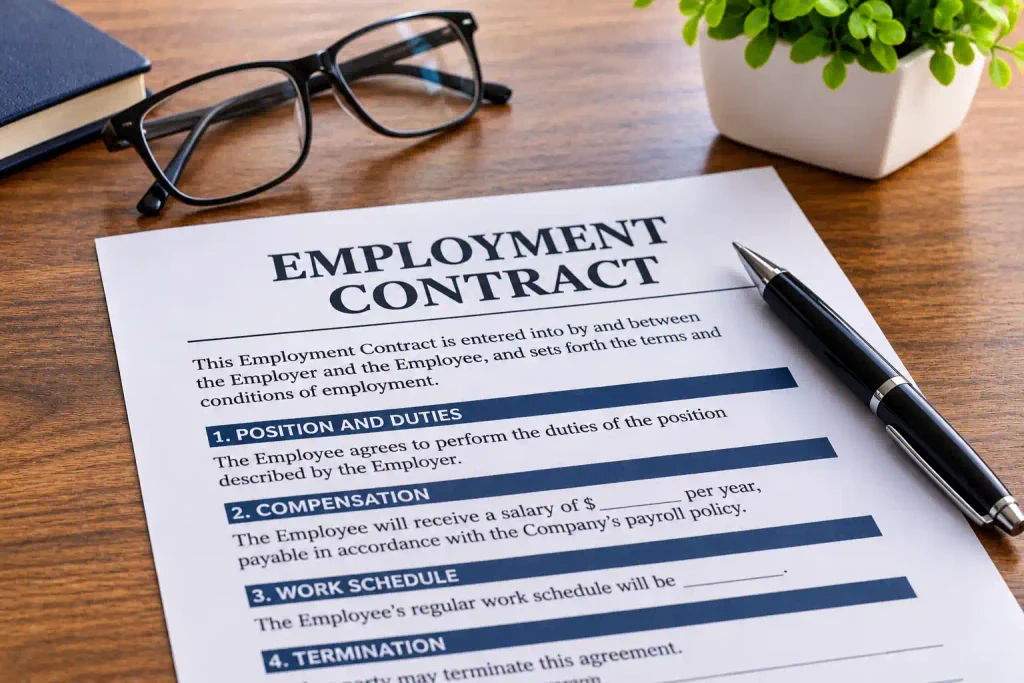
If you signed a binding employment contract guaranteeing a specific annual salary, or if your workplace operates under a union collective bargaining agreement (CBA), your wage rates are locked. Management cannot unilaterally slash your pay without breaching the contract, opening the door to legal action or union grievances.
When does a drastic pay cut qualify as “constructive dismissal”?
If an employer slashes your pay by a drastic margin—typically 20% to 30% or more—it may constitute Constructive Dismissal / Constructive Discharge. This legal doctrine treats the pay cut as an intentional firing, allowing you to quit and still collect unemployment benefits.
Understanding constructive discharge thresholds for unemployment eligibility
What happens if a company cuts your pay by 40% just to force you to quit so they don’t have to fire you?
The law has a defense for this exact corporate maneuver called constructive dismissal / constructive discharge. When working conditions—such as a massive, punitive wage slash—become so intolerable that no reasonable worker could stay, the law views your resignation as an involuntary termination. In most states, quitting under these extreme circumstances still qualifies you for state unemployment insurance benefits.
Identifying retaliatory pay cuts and illegal employer retaliation
Employers sometimes use sudden wage cuts as a weapon.
If management slashes your pay immediately after you filed a sexual harassment complaint, requested FMLA leave, or reported safety violations to OSHA, that is a textbook retaliatory pay cut. Punishing workers by cutting their pay for exercising their legal rights is strictly prohibited under federal and state whistleblower protections.
Practical Case Study: Fighting an illegal retroactive pay cut at a logistics firm
Consider an hourly warehouse worker whose boss tried to cut his hourly rate on the final day of the pay period. By filing a claim with the Wage and Hour Division, he recovered all stolen back wages under federal law.
Let’s look at how this plays out in the real world. Marcus worked as an hourly logistics handler at a regional distribution facility. On Friday afternoon—the final day of the two-week pay cycle—his supervisor announced that due to budget constraints, all hours worked during that exact pay period would be billed at a newly reduced hourly rate, $3 lower than his agreed-upon wage.
Marcus knew his rights. He refused to sign the revised wage agreement, preserved his original onboarding pay schedule, and filed a formal wage claim with the Wage and Hour Division (WHD) of the U.S. Department of Labor (USDOL). Federal investigators audited the company’s payroll practices, ruled that applying a pay cut retroactively violated the Fair Labor Standards Act (FLSA), and forced the company to issue full back-pay restitution to Marcus and his co-workers.
Frequently Asked Questions (FAQ) About Pay Reductions and Notice
Discovering a lower paycheck brings immediate financial panic. Below, we answer critical questions about sudden salary cuts, minimum wage floors, and your rights when facing arbitrary pay reductions.
Can my employer lower my pay for disciplinary reasons without telling me?
Generally, disciplinary wage cuts must still follow state advance-notice laws and can never drop your pay below statutory minimum wage floors. Retroactive disciplinary pay cuts for hours already worked are strictly illegal.
What should I do if my employer reduces my pay for hours I already worked?
Document the discrepancy immediately. Print your original wage agreement, save your paystubs, and send a written notice to HR pointing out that retroactive wage reductions violate federal labor standards. If they refuse to correct it, file a wage claim with your state labor office.
Can I collect unemployment benefits if my salary is drastically reduced?
Yes. If your employer slashes your pay by a severe margin (typically 20% to 30% or more), it may qualify as constructive dismissal, allowing you to resign and successfully file for unemployment benefits.
Disclaimer: The information provided on this website does not, and is not intended to, constitute legal advice. All information, content, and materials available on this site are for general informational and educational purposes only. Laws regarding employment and labor rights frequently change, and while we strive to keep our content updated, the information on this website may not constitute the most up-to-date legal or other information.
Use of, and access to, this website or any of the links or resources contained within the site do not create an attorney-client relationship between the reader, user, or browser and the website authors, contributors, or its owners. We are an independent publishing platform, not a law firm.
Readers of this website should contact a qualified employment attorney in their specific state to obtain advice with respect to any particular legal matter. No reader or user of this site should act or refrain from acting on the basis of information on this site without first seeking legal advice from counsel in the relevant jurisdiction. Only your individual attorney can provide assurances that the information contained herein – and your interpretation of it – is applicable or appropriate to your particular situation.
Know your rights.
References & Official Legal Resources
Do not let an employer manipulate your wages or execute illegal retroactive pay cuts. Verify your statutory rights regarding minimum wage floors, retroactive wage protections, and formal claim procedures through these official government portals:
-
U.S. Department of Labor (USDOL) – Wage and Hour Division (WHD):
Review federal minimum wage regulations, overtime standards, and legal protections against illegal wage deductions and retroactive pay cuts at the USDOL WHD Compliance Portal. -
U.S. Department of Labor – Filing a Wage Claim:
Access official federal reporting tools, forms, and instructions to file formal claims for unpaid wages and illegal pay reductions via the USDOL Wage Complaint Center. -
U.S. Department of Labor – State Labor Offices Directory:
Locate your specific state department of labor to review local advance-notice statutes, wage payment laws, and statutory pay reduction rules at the USDOL State Labor Office Directory. -
Worker.gov – Pay and Overtime Protections:
Explore clear federal summaries detailing employee rights to fair compensation, legally mandated advance notice, and protected pay structures at the Worker.gov Pay Protections Guide.
Keywords: can an employer reduce your pay without notice, is it legal to lower hourly wage without warning, retroactive pay cut illegal flsa wage theft, state advance notice laws for wage reduction, can my salary be decreased without my consent, can an employer reduce your pay without notice, constructive dismissal pay cut unemployment, can an employer reduce your pay without notice, minimum wage and salary basis test limits